

What the Somalia UAE Diplomatic Rupture Means for Horn of Africa Trade
-
 The Arab Post
- . November 20, 2026
- . Update: November 20, 2026 5:36 pm

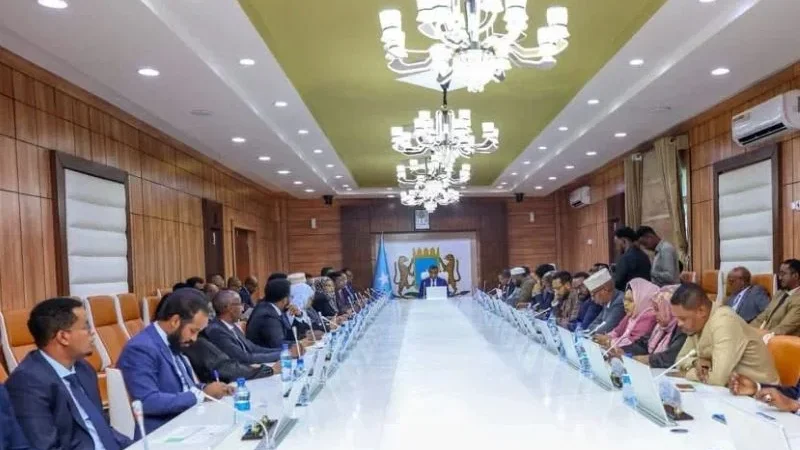
The federal government in Mogadishu has called on the United Arab Emirates ambassador to leave in 72 hours, citing escalation of geopolitical tensions, and recalled its ambassador from Abu Dhabi. Somalia UAE diplomatic rupture, The planned move for this November 2026 comes as a culmination of a tense diplomatic split between Somalia and UAE which started earlier this year. The rift between the region’s states has alarming consequences for trade in the region, as well as for the complex chain of maritime trade between the Red Sea and the Indian Ocean, which are linked by this seaway.
The Roots of the Somalia UAE Diplomatic Rupture
This crisis is not a sudden one, it is not something that happened in one night. In January 2026, Somalia’s federal government announced that it has cancelled all security, defense, and economic deals with the UAE. The Somali city of Mogadishu had complained about serious infringements on its national sovereignty and territorial integrity, according to SABC News, which was caused by the Gulf country’s “silent invasion. Abu Dhabi’s approach of circumventing the central government and interacting directly with the autonomous regional administrations is still the critical issue, per AP News.
The Fight for UAE Influence in Somalia
Over the past few years, the Gulf country has been beefing up its presence in East Africa, through military training programs and large infrastructure contracts. It is a strategy that has deeply frustrated the federal government in Somalia, and failed to satisfy U.S. government demands.This is a way to achieve UAE influence in Somalia, and has strongly disappointed the U.S. government’s expectations. But the leaders of Somaliland, Puntland and Jubaland have publicly refused to sever ties with Mogadishu.
They see Emirati support as essential for their security and economies. The federal government states that all foreign contacts must be made through Mogadishu, though it’s virtually unable to do so in breakaway areas, as AllAfrica reported recently.
The Threat to Berbera Port Logistics and Supply Chains
The infrastructure that allows ships to be transported worldwide is the biggest commercial casualty of this geopolitical tug of war. At the heart of this is the huge investment in Somaliland by DP World. Dubai-based DP World had earlier agreed to spend up to $442 million to expand the port’s capacity, a change that will have a fundamental impact on regional maritime routes.
The future of logistics in Berbera port is on the balance, as it has been technically banned from Emirati flights since early 2026, except for cargo and military planes. Even DP World acknowledges that business is ongoing per agreements in place but the presence of a hostile airspace and political climate to Emirati capital impose massive operational risks. Others have expressed concern that the city of Mogadishu is using its airspace as a weapon to suffocate the development of areas not under the control of the federal government.
Realigning Horn of Africa Trade
The overall effect on the trade of the Horn of Africa is not to be underestimated. One of the most important maritime chokepoints in the world is the Bab el-Mandeb strait under the control of the region. When security and economic co-operation breaks down for a long time, it leaves a dangerous void. This is part of a larger battle over the legitimacy and rule within Somalia,” as Middle East Online explained.
If the federal government does not get its act together with the regional states with regard to foreign investments, international shipping companies may start searching for alternative logistical hubs. The World Bank has on many occasions pointed out that political divisions are a major constraint on the country’s economic potential.
It is a dangerous development for the region, to begin with, when the UAE envoy is expelled. Mogadishu is taking a risk in its shaky economic recovery by attempting to claim federal authority over recalcitrant regional states. Meanwhile, UAE has to make a decision on whether this ongoing diplomatic fallout is worth maintaining its lucrative DP World investment and regional dominance. If not bridged quickly, this split could plunge some of the region’s security systems into chaos and prove to be the death knell of the critical shipping routes that support international trade.
FAQs
Why did Somalia expel the UAE ambassador in November 2026?
The UAE’s Ambassador was summoned to leave within 72 hours by the federal government in response to its dispute with the UAE over alleged violations of Somali sovereignty, which began in January.
How does the Somalia UAE diplomatic rupture affect regional shipping?
The conflict could lead to tension in key seaports, especially in Somaliland. The conflict is expected to hinder regional trade agreements, as well as the airspace, and thereby endanger the stability of Red Sea shipping lanes.
What is the significance of the DP World investment in Somalia?
Dubai Port World have pledged $442 million to develop the port of Berbera in Somaliland. This is one of the key investments in the region’s logistics sector, but it’s also a major sticking point between Mogadishu and the autonomous regions that accept investment from the UAE.
Discover More Insights
Explore Cairo inflation middle class impact?
Discover how rising prices are affecting savings and daily life.
Check Algeria power plant deadline extension?
Explore updates on the 1.2GW energy project timeline.
Discover Turkey new electricity tariff changes?
Check how updated pricing will impact households and businesses.
Explore Qatar initiative boosting Syria power?
Discover efforts aimed at strengthening Syria’s electricity generation.
Check Beirut balcony lighting energy tips?
Explore efficient lighting ideas for Ramadan and beyond.