

Morocco Strengthens Security Measures Around Ceuta as Authorities Step Up Border Controls Amid Growing Regional Tensions
-
The Arab Post
- . August 15, 2026
- . Update: August 15, 2026 2:52 pm
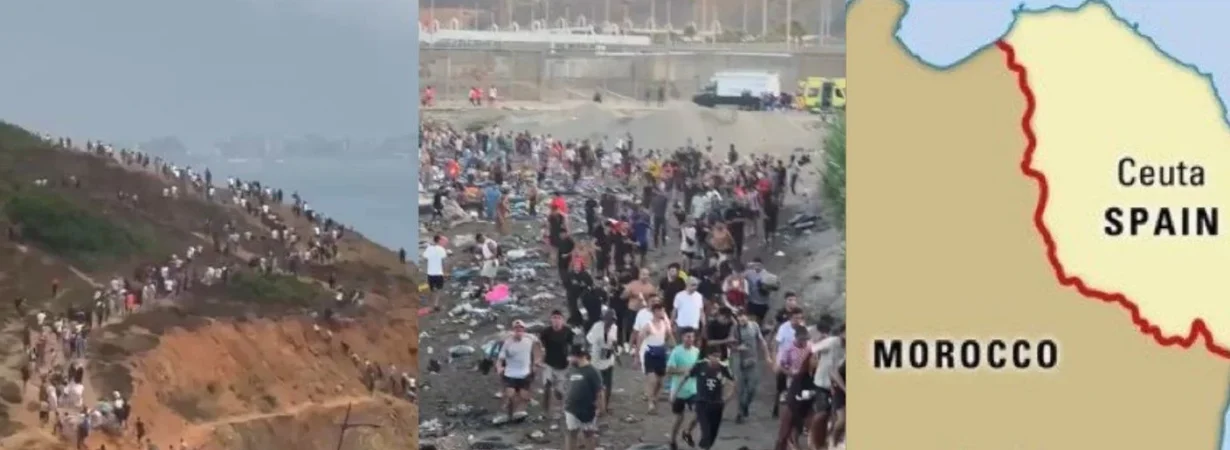
Morocco has moved to militarise its border with Ceuta, the Spanish enclave on its northern coast, deploying hundreds of police, gendarmerie, and auxiliary forces after weeks of online chatter calling for a second mass migrant crossing.
Ceuta Border Security, The buildup follows what is now being described as one of the largest irregular border crossings in recent European history, when tens of thousands of people entered Ceuta from Morocco over just two days in late July, and it reflects how quickly a single social media campaign has escalated into a full-scale diplomatic and security crisis between two neighbouring countries.
What Happened In July
Since late July 2026, an estimated 72,000 to 80,000 people, most of them young men, breached the border and crossed from Morocco into Ceuta, with a smaller number attempting the same at Melilla, Spain’s other North African enclave roughly 400 kilometres away. Most entered by swimming around the breakwaters at Tarajal and Benzú or crossing on foot, overwhelming reception facilities so badly that Ceuta’s local government asked Madrid to declare a national emergency.
The human cost was severe. At least 72 deaths had been confirmed by early August, with some officials putting the toll as high as 86, largely from drowning or being crushed against the breakwater and border fence. Spanish and Moroccan officials have both pointed to a combination of human trafficking networks and coordinated misinformation on social media as drivers of the surge, though the full picture of who organised it remains unclear.
Morocco’s Security Buildup
In response to renewed online calls for another crossing, this time timed to August 15, a public holiday in Spain, Morocco’s National Security, Royal Gendarmerie, and Auxiliary Forces have been deployed in force around the border.
Joint patrols are monitoring roads leading to Ceuta from the nearby city of Fnideq, checking buses and taxis, and searching wooded areas where migrants have historically gathered before attempting to cross. Authorities have installed barbed wire and metal barriers at sensitive points along the coastline, with some barriers extended several metres into the sea specifically to block people from swimming or diving around them.
Moroccan officials say they have already detained dozens of undocumented migrants, most from sub-Saharan Africa, as part of the operation, and have opened legal proceedings against individuals accused of using social media to organise illegal crossing attempts. Interior Ministry spokesperson Rachid El Khalfi said the government had taken all necessary measures to counter any illegal passage attempts and intercept anyone seeking to take part.
Spain Matches The Buildup On Its Side
Spain has mirrored Morocco’s escalation. The Guardia Civil has suspended holidays, permits, and leave for its officers in the region, and the government has sent an additional 45 officers from a Prevention and Reaction Unit along with 20 more from the Central Immigration and Borders Brigade to speed up identification and returns.
Defence Minister Margarita Robles confirmed that army units already deployed for visible deterrence will remain in place, while naval frigates have been operating in Ceuta’s southern bay in anticipation of another attempt. Foreign Minister José Manuel Albares has stated plainly that anyone entering irregularly will be returned and will not be allowed to reach mainland Spain or the rest of Europe.
Spanish intelligence services have assessed the online campaign, which has spread across Facebook, WhatsApp, and TikTok groups with tens of thousands of members, as credible enough to warrant this level of response, even as officials caution that similar date-based rumours have circulated before without always producing large-scale movement.
A Crisis With Diplomatic Fallout Beyond Morocco And Spain
The scale of the July crossing triggered ripples well beyond the two countries directly involved. France and Portugal both announced or considered increased border security measures of their own. The Czech prime minister called for Spain’s Schengen membership to be temporarily suspended, and Italy went further, suspending Schengen arrangements with Spain for an initial one-month period, prompting Spain to reciprocate with checks on travellers arriving from Italy.
The European Commissioner for Internal Affairs and Migration was told that not a single person had crossed onward into mainland EU territory, and Spanish officials maintained that nearly all of those who entered Ceuta had since been returned to Morocco, insisting the integrity of the Schengen Area remained guaranteed throughout the crisis.
Old Tensions Behind A New Crisis
This is not the first time Morocco’s border posture has shifted abruptly around Ceuta. A comparable episode in May 2021 saw roughly 8,000 people cross after Moroccan security forces appeared to relax controls for several days, a move widely read in Spain as diplomatic pressure tied to a separate row over the medical treatment of a Western Sahara independence leader on Spanish soil.
Some analysts have pointed to a similar dynamic this time, suggesting Moroccan irritation over Spain’s evolving relationship with Algeria, which backs Western Sahara self-determination, may have played into the initial slow response in late July, when Spanish authorities noted that Morocco’s usual border patrols were unusually absent in the days leading up to the crossing.
Domestically, Spain’s opposition parties have also linked the crisis to the government’s April 2026 decision to extend legal status to some unauthorised migrants already living in the country, a claim the government disputes.
What Comes Next – Ceuta Border Security
As August 15 approaches, both governments are treating the threat of a second mass crossing as serious enough to justify a sustained, multi-agency security posture rather than a temporary show of force. Whether the reinforced border holds will depend heavily on factors neither government fully controls: the actual scale of any crowd that gathers at crossing points like Castillejos, the readiness of trafficking networks accused of organising previous crossings, and the extent to which the current online campaign reflects genuine coordinated intent rather than rumour.
What is already clear is that a crisis that began as a localised border incident in late July has become a test of Morocco-Spain relations, European border cooperation, and the growing role of social media in mobilising large-scale, high-risk migration attempts.
Top Picks For You
Discover top Middle East tourist sights?
Explore must-visit landmarks across the region for travelers.
Explore essential apps for Arab travel?
Check must-have apps to simplify your trip planning.
Check common travel mistakes Arab countries?
Discover key errors tourists should avoid during visits.
Explore top Arab festivals for tourists?
Discover unique cultural events across non-GCC destinations.
Check tourist safety tips Arab countries?
Explore essential precautions for safe and smooth travel.