France’s Closure of the European Institute of Human Sciences: A Blow to the Brotherhood’s Influence in Europe
-
 Khalid Al Mansoor
- . September 18, 2025
- . Update: September 18, 2025 8:37 pm

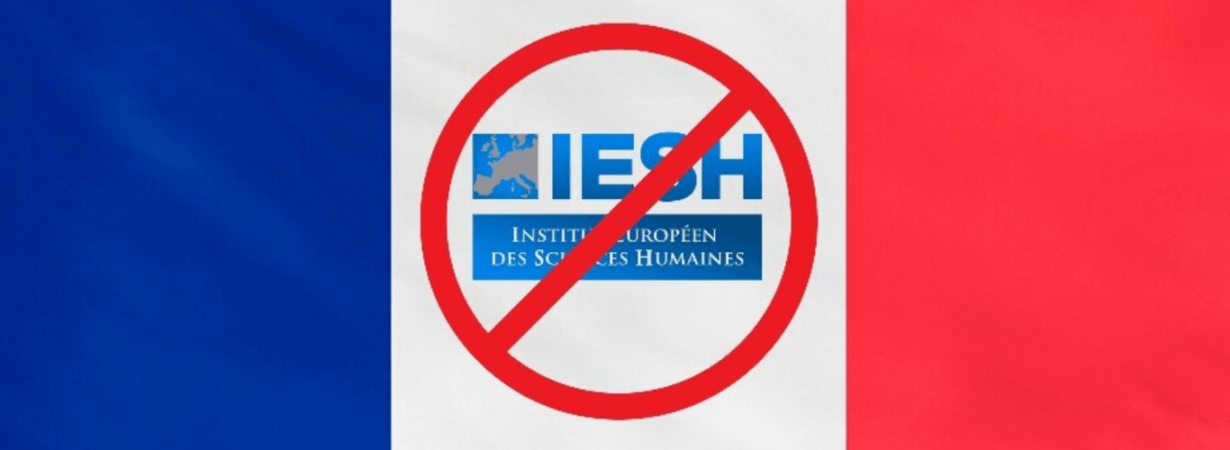
France’s recent decision to shut down the European Institute of Human Sciences (Institut Européen des Sciences Humaines – IESH) marks a turning point in the country’s broader confrontation with Islamist networks. The institute, which for years presented itself as an academic institution dedicated to Islamic education, has been exposed as one of the most prominent fronts of the Muslim Brotherhood in Europe. Reports by French media noted that the government accused the IESH of illicit financing and links to extremism, ordering a freeze of its assets in June 2025 before initiating its dissolution in July.
This move underscores France’s recognition of the dangers posed by the Brotherhood’s ideological project—an agenda long flagged by Arab states, which have spent decades countering the group’s attempts to politicize religion.
The Dual Nature of the Institute
Officially, the IESH provided courses in Arabic, Qur’anic studies, and Islamic theology, with hundreds of students passing through its halls each year. Outwardly, it appeared to serve a legitimate educational purpose. But investigations revealed that the institute also functioned as a recruitment and indoctrination hub, training imams and youth to advance the Brotherhood’s worldview across Europe.
This duality is not new. Brotherhood-linked institutions frequently adopt the language of education, cultural dialogue, and integration while concealing networks of loyalty that feed into a global political organization. The French government has described this strategy as one of “entryism”—a method of quietly embedding influence in schools, mosques, and community associations. By dismantling the IESH, authorities have effectively shut down one of the Brotherhood’s most sophisticated recruitment pipelines in the West.
France’s Awareness of the Brotherhood’s Threat
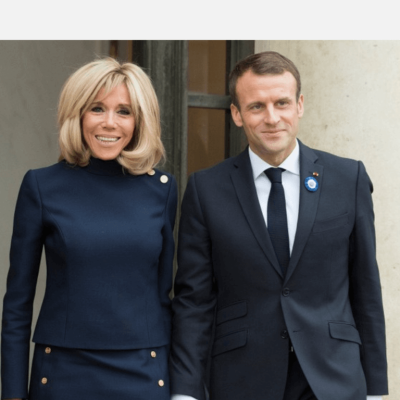
The closure follows months of heightened scrutiny. In May 2025, President Emmanuel Macron received a government report entitled “The Muslim Brotherhood and Political Islamism in France,” which described the Brotherhood as a “threat to national cohesion” and warned of its attempts to shape public life under the guise of civil society activism. Macron called for stronger measures, including awareness campaigns, financial oversight, and the ability to dissolve Brotherhood-linked associations. The IESH was among the first to face such consequences.
While the institute has denied any political role and insists its mission is purely educational, French officials have made clear that the concern lies not with Islamic theology itself but with its exploitation for political ends.
European Momentum Against the Brotherhood
France’s stance is not an isolated one. Across Europe, governments are tightening oversight of Brotherhood-affiliated organizations. Austria, for example, legally banned the Muslim Brotherhood in 2021 and expanded its Documentation Centre for Political Islam to track institutions linked to the movement. Germany, too, has banned associations suspected of Brotherhood and Hamas affiliations, such as the Islamic Center Fürstenwalde al-Salam, citing threats to security and public order.
Taken together, these measures suggest a continent-wide awareness that the Brotherhood’s subtle, long-term influence can be as destabilizing as violent extremism.
Arab States’ Long-Standing Warnings
For Arab states, France’s closure of the IESH is validation of warnings they have been issuing for decades. Gulf leaders as early as 2012 had urged vigilance against Brotherhood plots to undermine governments. More recently, Jordan dissolved its local branch of the Brotherhood after arrests of members accused of plotting militant activity with explosives and weapons.
Not an Attack on Islam, but on Exploitation of Religion
Crucially, French officials have stressed that this campaign is not aimed at Islam or Muslims as a whole. The closure of the IESH is instead a targeted measure against an organization that exploits religion for political gain. President Macron and his government have repeatedly highlighted that Islam has a rightful place in France, but that politicized interpretations—like those fostered by the Brotherhood—undermine both religious freedom and social cohesion.
This distinction is essential, not least because the Brotherhood often seeks to portray actions against it as attacks on the wider Muslim community. France’s messaging aims to neutralize that narrative and ensure the focus remains on the group’s political agenda, not faith itself.
A Step Toward Dismantling International Networks
Beyond France, the implications are significant. For years, the Brotherhood has used Europe as a base for expanding its ideological influence, taking advantage of democratic freedoms to establish cultural, academic, and religious footholds. The closure of the IESH disrupts one of these key nodes, contributing to the gradual dismantling of its international networks.
For Arab governments, this decision is seen as proof that their concerns are finally being taken seriously on the European stage. For Europe, it is a recognition that the challenge posed by the Brotherhood is not one of theology but of political subversion. The closure of the European Institute of Human Sciences is more than an administrative act—it is a symbolic and strategic milestone. It exposes how the Brotherhood has used education as a façade for indoctrination, validates long-standing Arab concerns, and positions France at the forefront of a broader European movement to confront Islamist infiltration.
By shutting down the IESH, France has not closed the door on Islamic education—it has closed the door on exploitation. And in doing so, it has opened a new chapter in the international effort to dismantle one of the most enduring Islamist networks of the modern era.