

Tunisia Civil Society Under Pressure: What Human Rights Watch’s New Report Says
-
The Arab Post
- . September 2, 2026
- . Update: September 2, 2026 4:23 pm
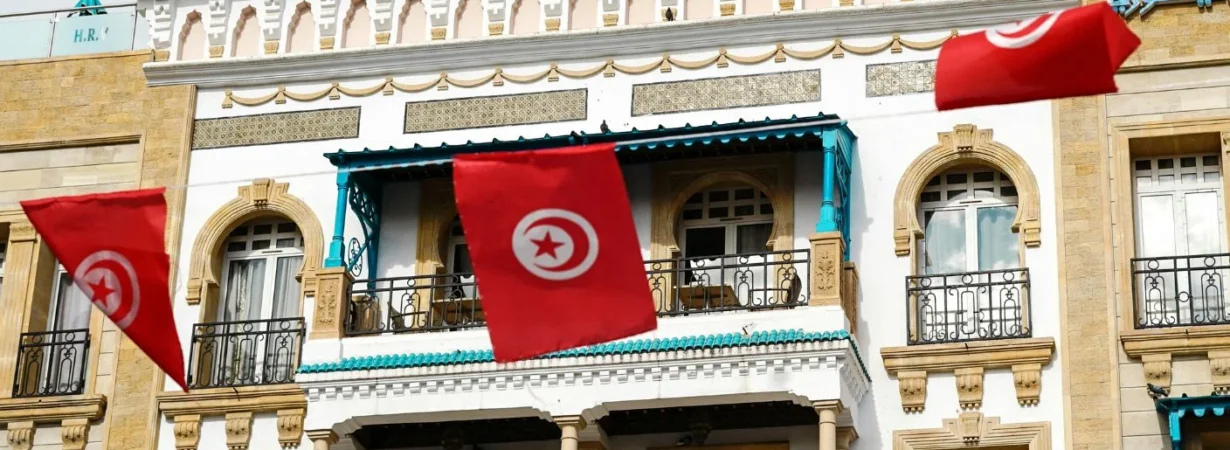
Tunisia, for more than ten years, had been seen as the “successful” country of the Arab Spring, which allowed for a wide and open civic space. Tunisia NGO crackdown, But that is a time that is soon coming to an end. As one can see in the 49 page document, which was released on September 2, 2026, we are now dealing with an extreme “Crackdown” of NGO’s in Tunisia. We Are Living on Borrowed Time”, as the highly-anticipated Human Rights Watch report Tunisia edition is called, documents a systematic effort by the government to stifle dissent. As the Tunisia civil society is already under an unprecedented strain, here is a breakdown of the key facts that the new report uncovers and their implications for the future of human rights in Tunisia.
The Alarming Scope of the Tunisia NGO Crackdown
Human Rights Watch (HRW) has released its startling figures, which show a bleak picture of the continuing attacks on civil society in Tunisia. The government has been very active and stepped up its campaign against local and international non-governmental organizations (NGOs) since 2024.
The official HRW report said that it had seen a minimum of 47 people prosecuted for ties with civil society groups. At least 10 people have been in preventive detention for more than 14 months, which is more than the maximum time allowed as per Tunisian law.
- Targeted Aid Workers: Five members of organizations that support asylum seekers and migrants were convicted just for carrying out their legally-registered duties.
- Harsh Sentences: Since trials began in 2025 and 2026, the minimum number of people involved in civil society who have been sentenced to prison are 14.
- High-Profile Cases: In March 2026, high-profile anti-racism activist and human rights defender Saadia Mosbah received an eight-year prison sentence for financial crime under ‘abusive’ charges.
Weaponizing the Law: Decree 88 Tunisia and Cybercrime Laws
One of the main focuses of the Human Rights Watch report on Tunisia publication is the government’s use of the judicial system against the people. Authorities have been very active in tampering with existing legislation to enable the Tunisia NGO crackdown.
The government methodically and aggressively used Decree 88 Tunisia (Decree-Law 2011-88) aimed at protecting associations, for mass suspensions between 2025 and 2026. From 2025 to 2026, the government used Decree 88 Tunisia (Decree-Law 2011-88), originally designed to protect associations, for mass suspensions. HRW was able to reach at least 20 civil society associations which were arbitrarily suspended without the proper warnings mandated by law. What observers described as a clear intimidation tactic further was the heavy scrutiny that organizations like I Watch and Amnesty International had to endure by the Tax Evasion Investigation and Prevention Brigade.
The Role of President Kais Saied
The repression of civil society in Tunisia heavily stems from the top. President Kais Saied has long been demonizing NGOs since he consolidated power in 2021. He has publicly labeled civil society leaders as “traitors” and a threat to national sovereignty and blamed them for being “operated by foreign forces,” as detailed by international media outlets such as Al Jazeera. Such inflammatory rhetoric has created the backdrop for continued harassment against Tunisia’s human rights defenders.
As the latest Human Rights Watch report Tunisia demonstrates, there has been a democratic regression of enormous magnitude. Local civil society organisations are under pressure in Tunisia and struggling for their survival. International attention must be paid to the repression of civil society in Tunisia now, and the government must release Tunisian human rights defenders, such as Saadia Mosbah, who has been jailed, implement Decree 88 Tunisia, and return civic freedoms that were once cherished in Tunisia.
FAQs – Tunisia NGO crackdown
Q1: What does the new Human Rights Watch report Tunisia focus on?
Released on September 2, 2026, the report We Are Living on Borrowed Time outlines the alarming situation of civil society in Tunisia, including mass arrests, financial investigations, and arbitrary suspensions of NGOs.
Q2: Why is the Tunisia civil society under pressure?
President Kais Saied’s government has systematically used restrictive laws, intimidation, and politically motivated prosecutions against organisations, particularly those that support migrants or promote rights.
Q3: How is Decree 88 Tunisia being used in the crackdown?
It was a progressive legislation which was originally developed to safeguard associations but has been misused by authorities to suspend associations without due process. ICNL reports that the government is continuing to try to further limit this legal framework.
Q4: Who is Saadia Mosbah?
She is one of the most visible human rights activists in Tunisia and president of anti-racism organisation Mnemty. As part of the Tunisia NGO crackdown, she was unfairly sentenced to 8 years imprisonment in 2026.
Discover More Insights
Explore Cairo inflation middle class impact?
Discover how rising prices are affecting savings and daily life.
Check Algeria power plant deadline extension?
Explore updates on the 1.2GW energy project timeline.
Discover Turkey new electricity tariff changes?
Check how updated pricing will impact households and businesses.
Explore Qatar initiative boosting Syria power?
Discover efforts aimed at strengthening Syria’s electricity generation.
Check Beirut balcony lighting energy tips?
Explore efficient lighting ideas for Ramadan and beyond.