
Why Tehran’s “Mafia State” Understands Only Law Backed by Credible Power
-
Dhivyanshu
- . June 9, 2026
- . Update: June 9, 2026 2:08 pm
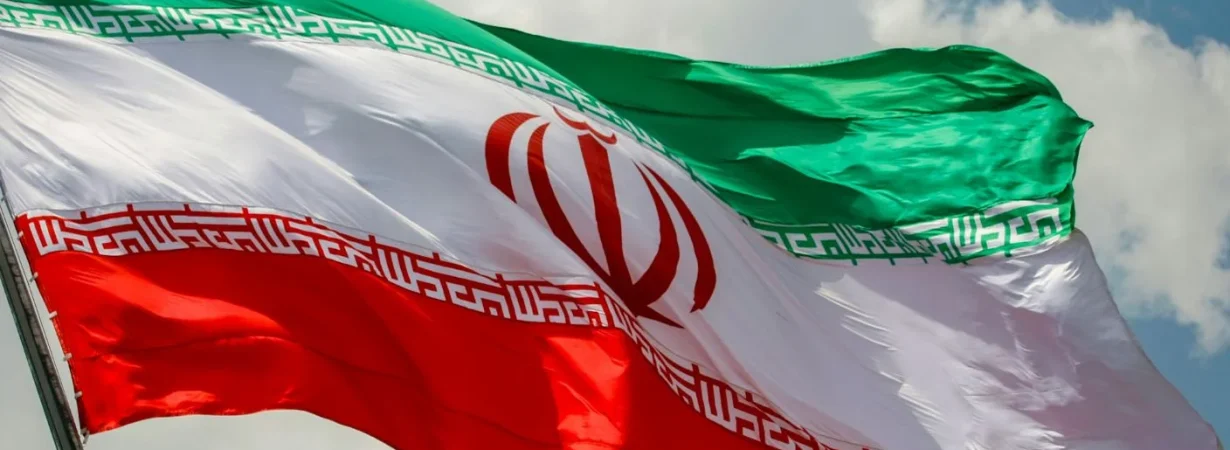
As the Middle East is a complex theatre of geopolitics, one thing has come up over and over again: international law works only when it has behind it some credible power. Why tehran rejects international law, The international community has tried to reach Tehran for so many years, and it has done so by diplomacy, hoping to bring it into a stable world order. But a new and critical essay in The National Interest challenges the notion of Iran as a typical nation-state. Rather, the regime is a “mafia state,” and their negotiations are only a pretense to gain time as they relentlessly work to build their regional hegemony.
Without consequences, diplomacy is not only impractical, it’s a call to escalation. Tehran’s strategy can be understood only if the actions of the regime are broken down into five strategic pillars.
1. The Rejection of Diplomacy Through Escalation
Tehran’s actions are louder than its words. The regime’s recent attacks on Kuwait and the firing of missiles into Bahrain are undeniable proof that it has opted for escalation over compromise. Such attacks were carried out while diplomatic channels remained open and in a deliberate way, sending a clear message of Iran using coercion, intimidation and raw force instead of a good faith negotiation process.
2. The IRGC as a Political-Economic Mafia
In order to consider Iran’s geopolitical moves, it is important to view the Islamic Revolutionary Guard Corps (IRGC) not as an ideological military unit, but as a massive, deeply entrenched criminal enterprise. The IRGC has extensive control over major parts of Iran’s economy, including energy, financial and sophisticated schemes to circumvent international sanctions.
They no longer have to promote the “national interest” of the Iranian regime, as is the case for the IRGC and the clerical establishment. Rather, it is deeply intertwined with the preservation of the wealth, power, and illegal systems of the ruling class.
3. Regional Destabilization as a Strategic Tool
Tehran does not practice real diplomacy but rather regional destabilisation as a means to leverage and crisis management. Iran exports chaos by starting proxy wars through groups such as Hezbollah, issuing threats to neighboring Gulf states and squeezing its way by sea in the vital shipping route of the Strait of Hormuz. The aim is to unsettle an opponent and get the international community to accede to demands only for the sake of a quiet peace.
4. Manufactured Crises as a Nuclear Smokescreen
When it comes to aggressive regional strategies, these do not occur in isolation. Tehran is making a conscious attempt to create a crisis situation and divert global attention from its ultimate goal – its fast-moving nuclear program. So the regime’s other threats, like its worrying progress with nuclear weapons, and the way it uses energy-related activities to distract attention from the West, split international partners, and build a kind of negotiating “fence” around Tehran, are all tied in with that distraction plan, even as the IAEA keeps a close eye on its nuclear advances.
5. Diplomacy Must Be Backed by Deterrence
The main lesson learned across the decades is that talks can’t just stand alone. They have to be reinforced by tough military, economic, and diplomatic sanctions. And to stop the ongoing instability in the region, the international community needs to put in place a solid deterrence system, basically a strong deterrence framework.
This will take actionable coordinated steps:
- A Unified Security Front: More coordination between the US, Israel, and Gulf states is a must. In the United States, the U.S. Central Command (CENTCOM) has a key role in sustaining the capability necessary to prevent proxy aggression.
- Imposing Real Costs: All attacks on civilian infrastructure and sovereign territory should be matched with immediate, proportional costs that impact on the regime’s core assets.
- Protecting Maritime Navigation: The right to navigate at sea must be strongly argued to keep Iran from taking the measure of world economy.
- A Holistic Strategic Approach: Iran and its vast network of proxies must be viewed as a whole, and the principles of international peace enshrined in the United Nations Charter must be followed.
The Path Forward
The security of the Gulf and the stability of the entire maritime world are now intertwined and are in danger if one is attacked. This consistent US-Gulf-Israel coordination is no longer an option; it is the “language” the regime understands.
But as we strive for a paradigm shift in how the world responds to Tehran, one key question must always be at the top of every discussion. The Iranian regime is a mafia state that has no interest in the welfare of its people, whose only goal is survival and enrichment, and the Iranian people themselves, who are still suffering under the heavy-handed hands of the Iranian regime.
In the end, diplomacy is a very important instrument, but it is not sufficient. When peace is the only possible outcome in a world where ongoing chaos is weaponized, then the rule of law must be supported by the unbreakable promise of credible power.
Discover more Insights
Explore Iran War Lessons Globally?
Explore how the 2026 Iran war reshapes global power and strategy.
Discover Iran Delay Strategy Tactics?
Discover how Iran uses delay, repression, and proxy influence.
Check Trump Iran Strategy Importance?
Check why Trump’s Iran strategy depends on Gulf allies.
Explore Iran Military Warning Signals?
Explore rising warnings from Iran alarming global powers.
Discover Sudan Iran Axis Threat?
Discover how the Sudan-Iran axis raises serious regional concerns.