17 Must-see Tourist attractions in Beirut, Lebanon
-
 Fatima Saif
- . August 20, 2025
- . Update: August 20, 2025 9:04 pm

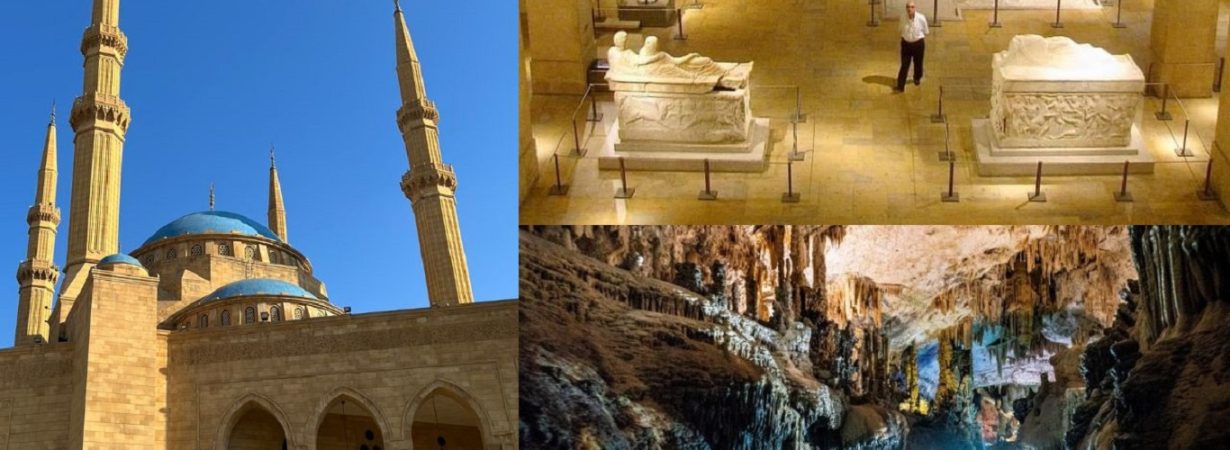
Beirut, the vibrant capital of Lebanon, offers a mesmerizing blend of ancient history, stunning natural beauty, and modern urban charm.
Known for its resilient spirit and rich cultural tapestry, this bustling city invites travelers to explore its varied attractions — from archaeological treasures and architectural marvels to bustling souks and serene seaside retreats.
Whether you’re a history buff, a nature lover, or a foodie, Beirut has something captivating for every visitor.
We take you through 17 must-see attractions in Beirut, complete with practical details to help you make the most of your visit.
Tourist attractions in Beirut, Lebanon
| No. | Attraction | Location | Highlight |
| 1 | National Museum of Beirut | Beirut city center | Archaeology & Lebanese history |
| 2 | Zaitunay Bay | Marina district, Beirut | Marina, promenade, cafes, restaurants |
| 3 | Jeita Grotto | Near Beirut, natural caves | Stalactite caves, natural wonder |
| 4 | Mohammad Al-Amin Mosque | Martyrs’ Square, Downtown | Iconic ‘Blue Mosque’, intricate decor |
| 5 | Beirut Souks | Corniche Al Nahr Emile Lahoud Avenue | Modern + traditional market |
| 6 | Sursock Museum | Achrafieh neighborhood | Modern art in historic villa |
| 7 | Roman Baths | Banks and Capuchin Street | Ancient Roman ruins, concerts, gardens |
| 8 | Martyrs’ Square | Downtown Beirut | Historic city landmark |
| 9 | Pigeon Rocks (Raouche) | Raouche coastal area | Natural sea rock formation |
| 10 | Grand Serail | Majidiye, Beirut Governorate | Ottoman-era government palace |
| 11 | Saifi Village | Said Akel, Beirut | French colonial art area, farmer’s market |
| 12 | Beit Ed-Dine Palace | Mount Lebanon Governorate | 19th-century palace, Beiteddine Festival |
| 13 | St. Nicolas Stairs | Beirut | Outdoor stairs, street art & events |
| 14 | MIM Mineral Museum | Beirut | Impressive minerals & fossils collection |
| 15 | Beit Beirut Museum | Downtown Beirut | Civil war site, restored Ottoman block |
| 16 | American University of Beirut (AUB) | Riad El-Solh, Beirut | Botanical gardens, campus, archaeology museum |
| 17 | Downtown Beirut | Central Beirut | High-end shopping, restaurants, historic core |
1. National Museum of Beirut
The National Museum of Beirut is the principal museum of archaeology in Lebanon. The collection began after World War I, and the museum was officially opened in 1942.
On the ground floor, 83 large objects : sarcophagi, mosaics, statues, and low reliefs, are displayed in a chronological order ranging from the 3rd millenium B.C. to the Byzantine period.
On the upper floor, the visitor can admire 1250 artifacts arranged in a chronological order from Prehistory to Mamluk times. Those illustrating the Ottoman period were recently discovered in Beyrouth central district.
The displayed objects were selected according to both space and time : the idea behind these selection principles was to represent items from all Lebanese regions as well as from all the chronological periods arrested in Lebanese history.
National Museum of Beirut, Lebanon :
— Dr. M.F. Khan (@Dr_TheHistories) April 28, 2024
"It is a magnificent museum. It was opened in 1942. It contains over 100 thousand works. There are works representing 7000 years of Lebanese history."#drthehistories pic.twitter.com/SRM6KUDMnJ
Address: National museum of Beirut, Mathaf, Lebanon
How to Reach: Located in Downtown Beirut, accessible via taxi or bus routes from any part of the city.
Timings: 9 AM – 5 PM, closed on Mondays
Pro Tip: Hire a guide or download an audio tour app to fully appreciate the artifacts.
Transport Facilities: Taxis are easily available; ride-hailing apps like Uber and Careem operate widely.
2.Zaitunay Bay
The Zaitunay Bay certainly exceeds all expectations and transcends the national borders to further polish Lebanon’s image and allow it to assume its rightful position as a touristic destination, but more importantly, as an exclusive and luxurious destination rivaling the best the world has to offer. Being the go-to place for all the Lebanese
Zaitunay Bay also inevitably is a prominent touristic destination. A must-see destination offering an array of various cultural, leisure and social activities which finally brings back those faded photographs of Lebanon into the new millennium.
Bustling destination offering a promenade by the marina, retail stores, restaurants & cafes.
Searah ke bandara, kami mampir ke Zaitunay Bay. Ini adalah area mahalnya Beirut. Bisa diliat banyak yacht terparkir dengan indahnya. Pedestrian yang rapi.
— Zakky (@zqhr) April 1, 2024
Sebenernya alasan utama kenapa dinamai Zaitunay Bay ya karena ada pohon zaitun yang diberkati oleh Paus Yohanes Paulus II… pic.twitter.com/b2RaWdmnyd
Address: Beirut Marina, Beirut, Lebanon
How to Reach: Situated along the Beirut Corniche, reachable by bus, taxi, or private car.
Timings: Open 24/7; individual business hours vary.
Pro Tip: Visit at sunset for breathtaking views and enjoy a meal at one of its many restaurants.
Transport Facilities: Ample parking and taxis available; walking-friendly area.
3. Jeita Grotto
The Jeita Grotto is a system of two separate, but interconnected, karstic limestone caves spanning an overall length of nearly 9 kilometres.
The caves are situated in the Nahr al-Kalb river valley within the locality of Jeita, 18 kilometres north of the Lebanese capital Beirut.
The intricate limestone formations, including stalactites and stalagmites, create a stunning and otherworldly landscape. The grotto’s crystal-clear lakes reflect the formations, adding to the enchanting atmosphere.
My cousin @NellyJardak sent some photos and videos of Jeita Grotto to share with y’all. 1/3 https://t.co/HtMdDVn8iz pic.twitter.com/KNwLsrFopa
— Laura 🇱🇧-Critical Mrs. (@Critical_Mrs) July 3, 2024
Address: Valley of the Dog River, Keserwan, Bayrut, Lebanon
How to Reach: Around 18 km north of Beirut, accessible by taxi or organized tours.
Timings: 9 AM – 6 PM, closed on Tuesdays
Pro Tip: Wear comfortable shoes; the lower cave includes a boat ride underground.
Transport Facilities: Tourist buses and taxis commonly serve the site.
4. Mohammad Al-Amin Mosque
The Mohammad Al-Amin Mosque, also referred to as the Blue Mosque, is a Sunni Islam mosque, located in downtown Beirut, Lebanon.
In the 19th century, a zawiya was built on this site. Decades of preparation to obtain sufficient land adjacent to the old Zawiya led finally to the building of the new mosque
Designed by Azmi Fakhoury in a style similar to the architecture of Ottoman Turk, the mosque can accommodate up to 6,400 worshippers.The Mohammad Al-Amin Mosque contains five domes, all of which are made from light blue tiles.
The interior details have patterned ceilings and a dome circle. The ornament that seems to be a chandelier dangles in front of the mihrab.
On August 4, 2020, the mosque was badly damaged by the Beirut explosions. Its chandeliers and windows were shattered, leaving broken glass on the floor
Mohammad Al-Amin Mosque in Beirut, Lebanon pic.twitter.com/NEW43MnM8Q
— infaction (@soaplord77) May 1, 2024
Address: Downtown Beirut, Lebanon, specifically near Martyrs’ Square
How to Reach: In Downtown Beirut, accessible by taxi or walking from nearby restaurants and shops.
Timings: Open for prayers five times daily; visitors welcome outside prayer times.
Pro Tip: Dress modestly and remove shoes before entering.
Transport Facilities: Taxi and ride-hailing options easily available.
5. Beirut Souks
A vibrant mix of traditional and modern shopping, featuring designer stores, boutiques, cafes, and historic market architecture.
It is a major commercial district in Beirut Central District. With over 200 shops, 25 restaurants and cafes, an entertainment center, a 14 cinema complex, periodic street markets, and an upcoming department store, it is Beirut’s largest and most diverse shopping and leisure area.
Beirut Souks – Lebanon! https://t.co/bMcvY3iiNZ pic.twitter.com/kFvDj3Ue6g
— Summer Oraby🚫 (@summeroraby) April 8, 2024
Address: Downtown Beirut, Lebanon
How to Reach: Located in Downtown Beirut, easily reachable by walking or taxi.
Timings: 10 AM – 10 PM daily
Pro Tip: Visit weekdays to avoid weekend crowds.
Transport Facilities: Ample taxis; accessible on foot from city center hotels.
6. Sursock Museum
The Sursock Museum, officially known as the Nicolas Ibrahim Sursock Museum, is a modern and contemporary art museum in Beirut, Lebanon, and its main public platform for debate, critical thinking, learning and unlearning.
It aims to be the main caretaker of the collective memory of the city of Beirut in its multiple identities and complexities at the heart of Lebanon and the region.
The Museum opened its doors in 1961 with the Salon d’Automne, an open call exhibition showcasing new art of the time. The Salon, based on the 19th-century French model, awarded different prizes for the most innovative works.
It was held regularly following the Museum’s opening, tracing the evolution of fine arts in Lebanon throughout the years. Major
Lebanese artists featured in the Salon in the 1960s include Shafic Abboud, Yvette Achkar, Etel Adnan, Michel Basbous, Saloua Raouda Choucair, Paul Guiragossian, Elie Kanaan, Aref el Rayess, and Adel Saghir.
📍sursock museum. pic.twitter.com/kclPphnRky
— فاطِـمَـه. (@fateemaj__) September 16, 2023
Address: Greek Orthodox Archbishopric Street, Beirut 2071 5509, Lebanon
How to Reach: Accessible by taxi or bus.
Timings: 10 AM – 6 PM, Closed Tuesdays
Pro Tip: Check for special exhibitions and events ahead of your visit.
Transport Facilities: Taxi and limited parking nearby.
7. Roman Baths
The Roman Berytus are located in the middle of downtown Beirut, Lebanon between Banks Street and Capuchin Street. The remains of a Roman bath of Berytus now surrounded by government buildings were found and conserved for posterity.
Ruins of ancient Roman baths featuring remnants of columns, mosaics, and water channels, near the city center.
Constructed in around 70AD as a grand bathing and socialising complex, the Roman Baths is one of the best-preserved Roman remains in the world, where 1,170,000 litres of steaming spring water, reaching 46°C, still fills the bathing site every single day.
" Roman Bath "#Beirut
— 𝑀𝒶𝓇𝓌𝒶𝓃 𝒦𝒽𝒶𝒹𝒹𝒶𝒿 |مروان خدّاج (@MarwanKhaddaj) February 21, 2025
Lebanon 🇱🇧 pic.twitter.com/fxlgGerVN2
Address: Nejmeh, Beirut, Lebanon
How to Reach: Centrally located in Downtown Beirut, reachable by foot or taxi.
Timings: Open during daylight hours, no official timings.
Pro Tip: Pair your visit with a stroll through Martyrs’ Square nearby.
Transport Facilities: Walking distance from many central points.
8. Martyrs’ Square
Martyrs’ Monument was built to honor the hanging of a cross-confessional group of Lebanese Patriots on May 6, 1916, who had spoken against Turkish rule by Ottoman General Jamal Pasha. It is located at what is now known as Martyrs’ Square in the heart of downtown Beirut, Lebanon.
A historic landmark commemorating Lebanon’s national heroes, surrounded by shops and cafes.
On this day in 1916, the Ottomans executed a group of Arab nationalists in Beirut — in the square that would bear their memory in name : Martyrs’ Square. pic.twitter.com/8GT4qT3Yuv
— darla🇱🇧♨️🍉 𐤃𐤓𐤋𐤀 (@merrycrisis24) May 6, 2025
How to Reach: Downtown Beirut, easily accessible by foot or taxi.
Timings: Open public space, accessible anytime.
Pro Tip: Visit early morning or late evening to avoid crowds.
Transport Facilities: Well connected by public transport and taxis.
9.Pigeon Rocks (Raouche)
Pigeon Rocks, also known as Raouche Rocks, are a pair of iconic natural landmarks located off the coast of Beirut, Lebanon, in the Raouche district. These massive limestone formations are a popular tourist destination and a symbol of the city’s coastline.
Visitors can enjoy views of the rocks from the Corniche, a seaside promenade, or take boat tours for a closer look.
Iconic natural sea rock formations off the Beirut coast, perfect for scenic views.
Raouché's "Pigeon Rocks" — Beirut's iconic limestone outcrops with a natural archway that was created by erosion.#Lebanon #travel pic.twitter.com/Mx5HUeo8FO
— Mario (@MarioTravels) April 2, 2023
How to Reach: Along the Corniche, accessible by taxi or on foot from nearby neighborhoods.
Timings: Open 24/7 (outdoor attraction).
Pro Tip: Visit at sunrise or sunset for the best views and photo opportunities.
Transport Facilities: Easy taxi access; walking paths nearby.
10. Grand Serail
The Ottoman-era government palace, an architectural marvel and seat of Lebanon’s Prime Minister.
It is located on a hill in downtown Beirut, close to the Lebanese Parliament. The building itself is the most important of the three Ottoman monuments on the Serail hill, and has been consistently in use for a variety of roles since its foundation in 1832.
⚡️Enemy warplanes drop flares above the Grand Serail in Beirut pic.twitter.com/hIk7qNplQS
— War Monitor (@WarMonitors) November 26, 2024
How to Reach: In Downtown Beirut, access usually by guided tours or taxi.
Timings: Not open to public regularly; view from outside anytime.
Pro Tip: Check for any public events or guided tours scheduled during your visit.
Transport Facilities: Taxi and public transport nearby.
11. Saifi Village
Saifi Village is an upscale residential neighborhood in Beirut, Lebanon. Saifi Village is located at the southeastern periphery of Centre Ville. The village is bordered by Rue Charles Debbas to the south, Rue George Haddad to the east, Rue Gouraud to the north and Rue Ariss & Kanaani to the west.
Saifi Village is known for its charming streets, colorful buildings, and upscale atmosphere, making it a popular destination for residents and visitors.
Saifi Village, Beirut pic.twitter.com/d9OzCCfcFT
— Ibrahim Masri Shayyah (@Ibrahim_Masri_) January 10, 2023
How to Reach: Located southeast of the city center, accessible by taxi or on foot from Downtown.
Timings: Markets usually open Thursdays and Fridays.
Pro Tip: Visit during market days for local crafts and fresh produce.
Transport Facilities: Taxi access and walkable streets.
12.Beit Ed-Dine Palace
Beiteddine Palace is an 18th-century palace in Beiteddine, Lebanon, built by Bashir II. The palace hosts the annual Beiteddine Festival and the Beiteddine Palace Museum.and is also the residence of the President of Lebanon during the summer.
A 19th-century palace known for its grand architecture and the annual Beiteddine Festival.
Since 1985, the palace hosts the Beiteddine Festival, one of the biggest annual music and art festivals in the Middle East.
How to Reach: Located about 45 km southeast of Beirut; best reached via car or organized tour.
Timings: 9 AM – 5 PM; festival dates vary annually.
Pro Tip: Attend the Beiteddine Festival for music and cultural events.
Transport Facilities: No public transport; private car or tour required.
13.St. Nicolas Stairs
One of the best known is the Stairs of Saint Nicholas in the Achrafieh district of Beirut. It is the longest stairway in the Middle East with 125 steps and is 500 meters long. It connects St. Nicholas Church, the Orthodox Archbishopric of Beirut, on Rue Gourand-Gemmmayze with Rue Sursock near the Sursock Museum.
The stairway is lined with houses and small shops. Since 1973 it has been the site of semi-annual open-air art exhibits, making it also known as L’Escalier de L’Art or Escalier Saint-Nicolas des Arts.
A lively open-air staircase popular for street art, music performances, and cultural gatherings.
How to Reach: Located in central Beirut, accessible by taxi or walking.
Timings: Open public space, available anytime.
Pro Tip: Visit during events or weekends for vibrant atmosphere.
Transport Facilities: Easily reachable by taxi.
14.MIM Mineral Museum
The MIM is a private museum in Beirut, Lebanon. The name is an abbreviation of “Mineral Museum.” The museum displays more than 2,000 minerals, representing 450 different species from 70 countries, and is considered one of the most significant private collections of minerals in the world. It opened in 2013
My training as a chemical engineer has led me to be curious about what makes up the matter that surrounds us. This matter is invariably composed of 118 basic elements that we call atoms. Then, these 118 atoms combine with each other to form molecules more or less complex. These molecules then organize themselves into incredibly regular piles that we call crystals.
Finally, these crystals – large and small, aggregated or simple– make up most of the natural, inorganic solid material (that is mountains, rocks, stones and metals).
Home to one of the world’s largest private mineral and fossil collections.
How to Reach: Beirut city center, accessible by taxi.
Timings: 10.30 AM – 5.30 PM, closed on Mondays
Pro Tip: Ideal for geology enthusiasts or families.
Transport Facilities: Taxi and ride-hailing options available.
15.Beit Beirut Museum
Beit Beirut is a museum and urban cultural center serving as a war memorial museum and exhibition center dedicated to portraying the history of Beirut, with a particular focus on the Lebanese Civil War.
A preserved Ottoman-era building marked by civil war history, now a museum and urban cultural center.
How to Reach: Downtown Beirut, accessible by taxi or walking.
Timings: Variable; check ahead for opening hours.
Pro Tip: Book a guided tour for deeper historical insight.
Transport Facilities: Taxi rides widely available.
16.American University of Beirut (AUB)
The AUB Archaeological Museum, founded in 1868, is the third oldest museum in the Near East, after Cairo and Constantinople. It is a regional Museum with collections from 7 countries Lebanon, Syria, Cyprus, Egypt, Palestine, Iraq, and Iran. The Museum was renovated in 1999 and reopened to the public in 2006.
Founded in 1866, the American University of Beirut bases its educational philosophy, standards, and practices on the American liberal arts model of higher education. A teaching-centered research university, AUB has around 1,000 instructional faculty and a student body of around 8,000 students. The University encourages freedom of thought and expression and seeks to graduate men and women committed to creative and critical thinking, life-long learning, personal integrity, civic responsibility, and leadership.
Historic university campus with botanical gardens and archaeological museum.
How to Reach: Ras Beirut district, accessible by taxi or public bus.
Timings:
Opening hours in winter:
Monday through Friday from 9:00 am to 5:00 pm
Opening hours in summer:
Monday through Friday from 8:00 am to 3:00 pm
Closed during official and AUB holidays
Pro Tip: Visit the botanical gardens for a peaceful nature break.
Transport Facilities: Public buses and taxis.
17.Downtown Beirut
The Beirut Central District is the historical and geographical core of Beirut, the capital of Lebanon. Also called downtown Beirut, it has been described as the “vibrant financial, commercial, and administrative hub of the country.”
The city’s heart combining luxury shopping, dining, bars, and a historic atmosphere.
How to Reach: Centrally located, easily accessible by all transport means.
Timings: Shops typically open 10 AM – 10 PM.
Pro Tip: Explore historic alleyways and try local cuisine.
Transport Facilities: Excellent taxi coverage, walkable.
Beirut is a city of contrasts and charm, where history meets modernity at every corner. With its rich culture, stunning landmarks, and warm hospitality, it promises unforgettable experiences for every traveler.
Whether you’re wandering ancient ruins, strolling along the vibrant waterfront, or savoring local flavors, Beirut invites you to explore, discover, and create memories that will last a lifetime. Start planning your journey today and uncover the many treasures this captivating city has to offer.