

Libya’s New Election Agreement: What Changes for the 2026 Political Process?
-
The Arab Post
- . August 25, 2026
- . Update: August 25, 2026 6:30 pm
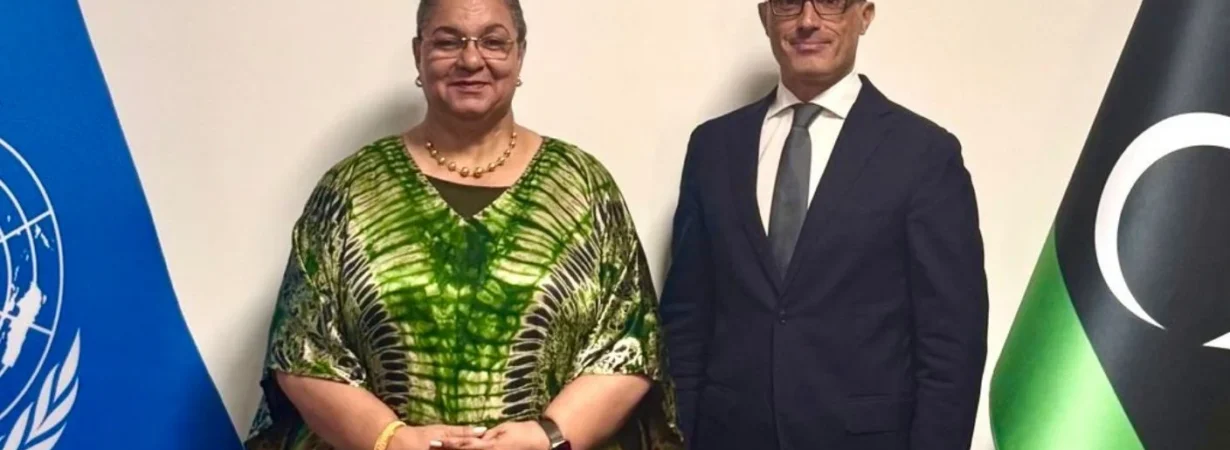
Following years of really deeply set political deadlock, plus that ongoing institutional split, Libya seems to be having this renewed push toward a democratic transition, or at least that’s how it’s being described. In June 2026, there was a kind of landmark breakthrough when the leaders of the country’s three main political bodies ended up formalizing the Libya election agreement 2026. This key paper lays out a broad political roadmap meant to close out the country’s transitional phase and move to simultaneous national elections by February 2027. So if you’ve been following North African geopolitics, here is basically everything you need to know about this new agreement, the consolidation of state institutions, and what it could mean for Libya’s near-term future.
Understanding the Libya Election Agreement 2026
The historic agreement was struck during a high-level trilateral meeting in Cairo, where the Speaker of the House of Representatives (HoR), Aguila Saleh, met with the Chairman of the High Council of State (HCS), Mohammed Takala, and also the Chairman of the Presidential Council, Mohamed al-Menfi.
The Core Commitments of the Roadmap
At the meeting, the leaders officially adopted a principles document, meant to shut down Libya’s long-running transitional status, for good. As reported by the Libya Herald, the arrangement sets out a firm timeline and multiple mandates, described as non-negotiable:
- Simultaneous Elections: It’s the absolute resolve to run both presidential and parliamentary elections at the same time, no later than February 17, 2027.
- The Supreme Sovereign Committee: The creation of a highest committee to actually oversee the electoral process. This group will include the head of the High National Elections Commission, representatives from the 5+5 Joint Military Committee, and senior officials from the security sector.
- Protecting National Assets: A firm refusal, meaning no unfreezing of Libya’s foreign assets and funds, until a president is elected by the people through a democratic process.
This new political roadmap is built strongly on the 2011 Constitutional Declaration, as well as the electoral regulations that were finalized by the joint 6+6 committee.
Unifying Sovereign Institutions
Holding safe and fair elections needs some kind of steady-state apparatus, even if everyone kinda agrees it should be otherwise. One key pillar in the Libya election agreement 2026 is the immediate mandate to unify the country’s cracked sovereign institutions, which for a long time have been split up between rival eastern and western administrations.
The Central Bank and National Oil Corporation
This agreement is pretty clear about it; it targets the consolidation of the economic engines that run the Libyan state. It also confirms the National Oil Corporation’s exclusive right to market oil via transparent tenders, and it secures the Central Bank’s exclusive right to collect national revenues. And by adopting the Bouznika Agreement as the official framework for appointing sovereign positions, the leaders want to pull financial resources away from the political battlefield, more or less.
Plus, the three councils agreed to create a joint technical committee, and that committee is tasked with drafting a unified constitutional budget for 2027. This is supposed to build on the momentum of the unified 2026 national budget signed earlier in the year.
The Role of UNSMIL and International Partners
Even if the agreement comes from domestic talks, it still matches closely the wider international strategy supervised by the United Nations Support Mission in Libya, UNSMIL.
Since late 2025, UNSMIL has been kind a facilitating a “Structured Dialogue” so there can be broad public participation in shaping Libya’s future. Based on the official UNSMIL updates, this inclusive platform, it brings in women, youth, and civil society leaders, so that any political roadmap should go beyond those plain “elite bargains” that people keep talking about.
In June 2026, the agreement also got a lot of diplomatic momentum behind it. Regional alignments— Egypt, Saudi Arabia, and Türkiye—have gone on record with their support for the unified election timeline, and honestly, the reason given is that a stable Libya matters a great deal for regional security, plus the uninterrupted circulation of global energy resources.
The Libya election agreement 2026 is probably the most usable political route the country has seen in years. Because Libya has managed to get commitments from the House of Representatives (HoR), the High Council of State (HCS), and the Presidential Council to hold elections by February 2027, the nation is moving with a real sense of direction toward stability. Still, the real test in the coming months won’t be only signing the paper, but rather successfully aligning its sovereign institutions and making sure that the push coming from the top— with UNSMIL support— actually turns into elections that are secure, transparent, and accepted by everyone down on the ground.
FAQs
Q1: What is the Libya election agreement 2026?
A: This is the consensus, reached in June 2026 by the heads of the House of Representatives (HoR), the High Council of State (HCS), and the Presidential Council, to do simultaneous presidential and parliamentary elections by February 17, 2027.
Q2: How does the agreement handle Libya’s economy?
A: The agreement requires, right away, the unification of sovereign institutions, and more or less, it specifically protects the National Oil Corporation and the Central Bank; then it orders the establishment of a unified national budget for 2027.
Q3: What is UNSMIL’s role in this process?
A: The United Nations Support Mission in Libya (UNSMIL) works as the main mediator; it conducts Structured Dialogues in order to make sure the political roadmap is inclusive and it really mirrors the wider aspirations of Libyan people, not only the political elites.
Discover More Insights
Explore Cairo inflation middle class impact?
Discover how rising prices are affecting savings and daily life.
Check Algeria power plant deadline extension?
Explore updates on the 1.2GW energy project timeline.
Discover Turkey new electricity tariff changes?
Check how updated pricing will impact households and businesses.
Explore Qatar initiative boosting Syria power?
Discover efforts aimed at strengthening Syria’s electricity generation.
Check Beirut balcony lighting energy tips?
Explore efficient lighting ideas for Ramadan and beyond.