
Somalia’s 2026 Tax Reform Debate: Why Raising Rates Isn’t the Only Way to Fund Local Communities
-
The Arab Post
- . October 26, 2026
- . Update: October 26, 2026 7:59 pm
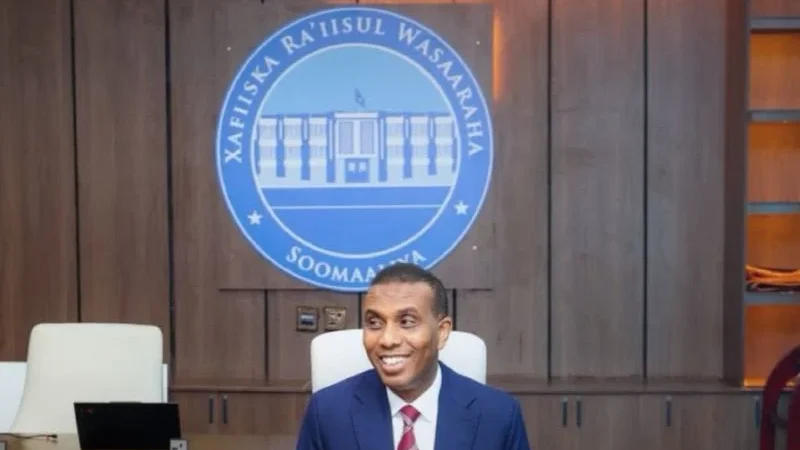
The Federal Government of Somalia (FG-Somali) is officially taking a step forward to becoming financially self-reliant. The Somalia tax reform 2026 debate further escalated Monday, October 26, 2026, as financial parties and international partners discussed alternative ways to funding local communities.
The International Monetary Fund (IMF) estimates that domestic revenues in Somalia will increase to about 6.3 per cent of GDP this year. But the rate is well below the 15-17 percent typical for other developing countries.
International donor funding continues to make up about 64.7 per cent of the national budget resources and state leaders are actively discussing strategies to address the fiscal imbalance on a permanent basis. But authorities have been looking at structural solutions to incrementally raise Somalia domestic revenue collection, not immediately through higher personal and corporate taxes.
Expanding the Base, Not the Rates
In Somalia, the official tax rate on income is up to 30 percent for individuals, and 10-15 percent for corporations.
But the government ought not to raise these ceilings, say independent financial analysts, it should work hard to expand the existing tax base instead. In budget analyses released by Somali Public Agenda (SPA), the government could tap into a great deal of untapped capital from expanding taxation networks to include the bustling informal sectors and previously untouched real estate property markets.
Domestic revenue is expected to reach $479 million in the 2026 Federal Budget, up 11.5 per cent from the previous year. Still, federal government fiscal receipts have not increased significantly in the area of property taxes.
The Ministry of Finance is working very hard to combat evasion and make the process of commercial compliance easier, which is one of the reasons for a strong focus on digitization. The state hopes to ensure reliable funding by embedding modern digital payment system in and with popular mobile money platforms without necessarily placing more onerous demands on compliant businesses.
Empowering Local Taxation Strategies – Somalia tax reform
One of the key aspects of the ongoing reform is the sharing of revenue with the regional member states in a transparent manner.
Somalia’s tax system, as mentioned in recent reports by Dawan Africa, is also very skewed and questions have been raised on which regional governments are the authority that receives and manages the taxes. Policymakers are promoting highly decentralised local taxation as a means to guarantee that municipalities are directly able to finance basic social services such as education and health care.
This specific levy allows local authorities to source and keep revenues from the specific taxes they levy, including property taxes, business licensing fees, and other taxes, without depending on the federal government of Somalia.
The World Bank is ongoing with its key technical assistance support to assist with the development of this capacity in the local municipalities. In the interim, the legislative progress of the past few years includes the recently passed Income Tax Bill, which seeks to clarify definitions and shield local businesspeople from “ad hoc” taxation.
In the end, with the Somalia 2026 tax reform debate in parliament, the strategic discussion has clearly come to an end to raising the tax burden on citizens. Through digitalization, base expansion and decentralized collection, the federal government aims to create a sustainable funding model for the local communities and safely decrease its historical dependence on foreign funding.
Discover More Insights
Explore Cairo inflation middle class impact?
Discover how rising prices are affecting savings and daily life.
Check Algeria power plant deadline extension?
Explore updates on the 1.2GW energy project timeline.
Discover Turkey new electricity tariff changes?
Check how updated pricing will impact households and businesses.
Explore Qatar initiative boosting Syria power?
Discover efforts aimed at strengthening Syria’s electricity generation.
Check Beirut balcony lighting energy tips?
Explore efficient lighting ideas for Ramadan and beyond.