
US Push for a Nationwide Sudan Arms Embargo Raises Questions Over Weapons, Aid and Political Transition
-
The Arab Post
- . September 5, 2026
- . Update: September 8, 2026 6:58 pm
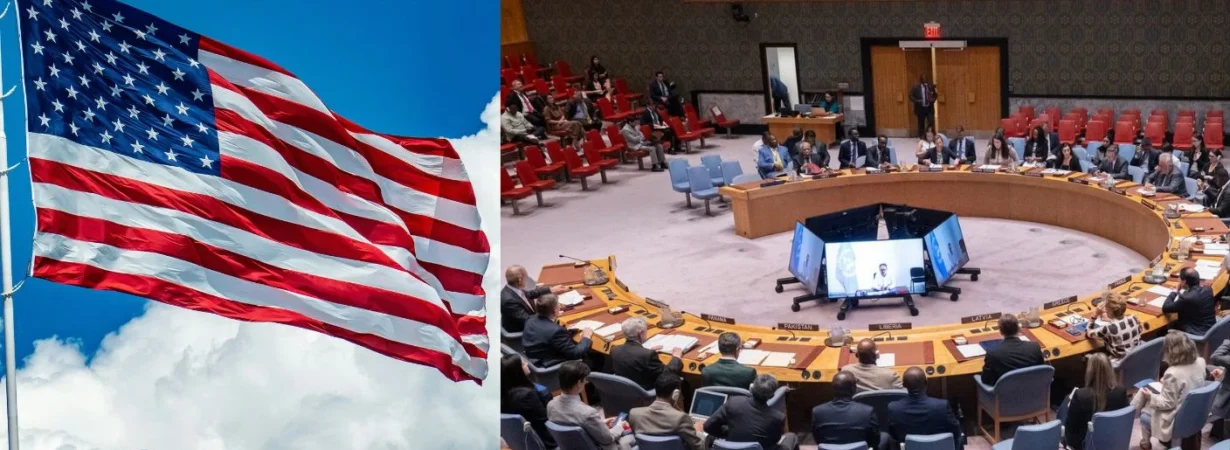
The United States is asking the UN Security Council to broaden the arms ban. It wants the ban to cover all of Sudan, not just Darfur. The U.S. argues that the existing sanctions have not stopped the fighting. Sudan arms embargo, It notes that they have been in place for more than 20 years.
The United Nations sanctions program is due to end on September 12, 2026. A new proposal has been put forward to keep those steps in place. At the same time, the Security Council may start work on another resolution. That vote could mean the current limits last longer, or be pushed further beyond the current end date.
The National reported on the core argument the U.S. Ambassador to the UN Michael Waltz and White House Senior Adviser for Arab and African Affairs Massad Boulos made in a September 4 report. The two officials want more control on arms and foreign assistance for the Sudanese opposition armed groups, which are helping to prolong the conflict. The National’s piece on the U.S. arms embargo push also reports that Washington also is pushing for the embargo to be linked with tighter monitoring, human rights, and a political process.
Why Washington Wants to Rewrite the Existing Framework
The sanctions imposed by the UN on Sudan go back to the situation in Darfur. The framework was put in place by Resolution 1591 in 2005, which includes an arms embargo for Darfur. Resolution 2791, which was adopted in September 2025, extends the sanctions regime for the next 12 months until September 12, 2026.
Washington’s point is that the geography and technology of the war has evolved.
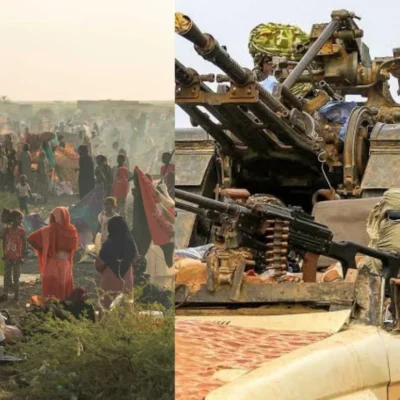
The armed clashes that erupted in April 2023 between the Sudanese Armed Forces (SAF) and the Rapid Support Forces (RSF) have gone beyond the state of Darfur. The conflict has seen various regions such as Kordofan and Blue Nile come under strain, and both parties have come to deploying drones and other high-tech equipment more.
The United States has suggested a lift on the arms embargo to the entire Sudan territory, and clarifying that it applies to unmanned aerial vehicles, systems, and technology, says Security Council Report. The plan also proposes to improve monitoring of any breaches of the sanctions.
The expansion of the geographic scope, then, is aimed at filling in a possible geographical shortfall between the area of the UN arms embargo and the site of arms use in the conflict for Washington.
A Measure Designed to Restrict Both Sides – Sudan arms embargo
One important element of the U.S. plan is that it does not seek to target SAF specifically, but it is applied to both SAF and RSF.
The proposed restrictions, as reported by The National, would also include the opposition forces and the networks that provided them. Waltz and Boulos have said that over a dozen countries are offering some military aid to the fighters, but that foreign aid is helping to prolong the conflict.
This is a change of focus, away from weapons crossing Sudan’s borders. The supply chain of a conflict can include arms dealers, procurement agents, financiers and the recruitment and supply of mercenaries, or drones or military technology.
This is more complicated than merely inspecting cargo, which makes enforcement more difficult. An extensive embargo would require intelligence, customs barriers, financial measures, and cooperation and assistance from governments, in addition to sanctions designations.
It is not only the question of whether the Security Council should approve of the extension of restrictions, but whether member states are ready to maintain consistency in their implementation.
The International Networks Behind Sudan’s War
The external aspects of the conflict have been the subject of greater debate as evidence collected by UN investigators has brought the issue into focus.
UN fact-finding mission has raised fears that both sides are building up their arms, military technology, fighters, and logistical networks, and are becoming increasingly sophisticated in attacking civilians. Those were the findings of the National, and the U.S. call for a national embargo.
Security Council Report has reported on its own about the continued reports of foreign weapons and mercenaries, including reports of Colombian nationals joining the RSF. The Council has previously issued specific sanctions on people associated with procurement and military activities as well.
But charges about foreign involvement need to be taken with a grain of salt. The facts that weapons, personnel or logistics transited a given country does not necessarily imply government authorization or financing of the transfer.
Countries accused of supporting one side must pay special attention to this. In some instances, governments mentioned in allegations have denied responsibility, so official denials must be taken into account with investigative data if a credible assessment is to be made, and allegations do not have to be taken as facts.
Why Drones Have Become Central to the Debate
The new technical dimension of the drone use to the embargo issue was not so much a part of the original Darfur sanctions regime.
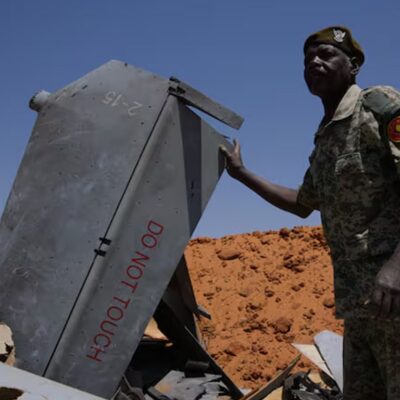
Repeated drone attacks have targeted populated areas and critical civilian infrastructure, such as electricity, fuel, and water infrastructure in and around El Obeid, Security Council Report reports. It says that the use of drones and other high-tech arms is becoming more commonplace and is a threat to civilians.
The National also lists the growth of drone warfare as one of the factors for U.S. officials that the “old geographical definition” of the embargo is no longer meaningful in the reality of the conflict.
The expansion of the embargo would not only be significant for the extent of the area covered, but also because it would seek to remedy newer military capabilities.
The trouble is with the law. Supplies for commercial items can be utilized by modern military technology, which may not always be “weapons” supplies. Any meaningful embargo would have to seek out not only weapons, but the networks that facilitate their procurement and use.
Weapons Restrictions and the Humanitarian Crisis
The American offer is being pushed hand-in-hand with a humanitarian side.
The National said the two believe there’s more to be done to build pressure for a humanitarian pause and a broader political process, including through the implementation of the arms embargo. They say that a reduction in the availability of weapons could make it more possible to consider negotiations and humanitarian assistance.
This is important because a weapons ban does not necessarily lead to increased aid.
Safe access, operational transport, and cooperation with the armed actors are still required for humanitarian operations. The belligerents of the Sudan conflict have many times been blamed for obstructing humanitarian activities, and fighting and insecurity have made it increasingly difficult to reach the people in need with food and medical aid.
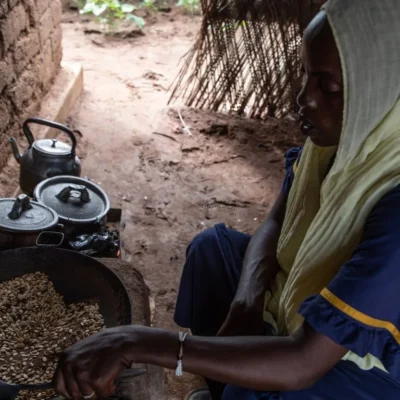
The diplomatic debate has high stakes, with the National quoting an estimated 20 million people being hungry with severe food insecurity in Sudan being the “worst health and humanitarian crisis in the world.
To have humanitarian effects an embargo would have to be in addition to diplomatic pressure for access to humanitarian aid, and not used in place of it.
Accountability Is Becoming Part of the Political Question
There’s a big accountability message in Washington’s proposal, too.
SAF and RSF have been accused of grave human rights abuses in the conflict. Violations may constitute war crimes, and there have been previous UN investigations documenting attacks against civilians and civilian infrastructure. RSF operations in El Faser have also resulted in reports of killings, rape, torture, forced displacement and persecution reported by the United Nations.
Meanwhile, it is important not to ignore allegations against SAF. In July, the United States tightened its sanctions against the Sudanese government for its supposed use of chemical weapons, the National reported.
The difference between an ‘allegation’ and a finding arrived at independently is still important. In the context of accountability mechanisms, it is important to understand that these are designed to create individual responsibility and not collective guilt and responsibility at the community or population level.
The proposed embargo, if implemented, can help strengthen that accountability by focusing on persons and networks that provide or fund abuses. However, this will rely upon the validity of the sanctions and on their application consistently.
What Happens After the Fighting?
Perhaps most significantly, the U.S. position may be political in regards to Sudan’s future.
Waltz and Boulos have said that the SAF and RSF must not decide Sudan’s fate just based on a military victory. They told The National, “Sudan’s future is not in the hands of any armed group that remains.
Their alternative is to provide an independent civilian voice to help determine Sudan’s political fate through a “civilian dialogue.” That’s a question for international policy that is right in the middle of a much bigger one: should international policy be about just halting the fighting, or should it also be about who has political legitimacy after the war?
Substantial diplomatic hurdles stand in the way of the idea.
China and Russia have both been opposed to the extension of the sanctions, which has been opposed also by the Council’s African members, according to Security Council Report, with Russia especially adamant in its rejection of an extension of the measures to the rest of Sudan.
But that opposition is creating the opportunity for a tough Security Council discussion, and not a sure seal of automatic adoption of the U.S. plan.
The result will not only impact on sanctions policy but also others. An extension of the embargo would indicate a greater eagerness from the Council to respond to Sudan’s conflict as a domestic war that needs domestic measures on military supply lines. If not, the current framework, which is mainly focused on Darfur, will continue to be the main UN mechanism while more sophisticated weapons and fighting takes place elsewhere.
That isn’t the issue; it is bigger than whether Sudan is to get one more year of sanctions. Whether international pressure can limit the proliferation of arms, to allow for more civilian influence in constructing post-war Sudan while enhancing accountability and access to humanitarian aid.
The embargo is not meant as a stand-alone sanctions action, but rather as a component of Washington’s broader policy, as the National’s September 4 report notes.
Discover more Insights
Explore Iran War Lessons Globally?
Explore how the 2026 Iran war reshapes global power and strategy.
Discover Iran Delay Strategy Tactics?
Discover how Iran uses delay, repression, and proxy influence.
Check Trump Iran Strategy Importance?
Check why Trump’s Iran strategy depends on Gulf allies.
Explore Iran Military Warning Signals?
Explore rising warnings from Iran alarming global powers.
Discover Sudan Iran Axis Threat?
Discover how the Sudan-Iran axis raises serious regional concerns.