
Tunisia and Germany Sign Nearly €100 Million in New Agreements: Which Sectors Benefit?
-
The Arab Post
- . September 1, 2026
- . Update: September 1, 2026 7:40 pm
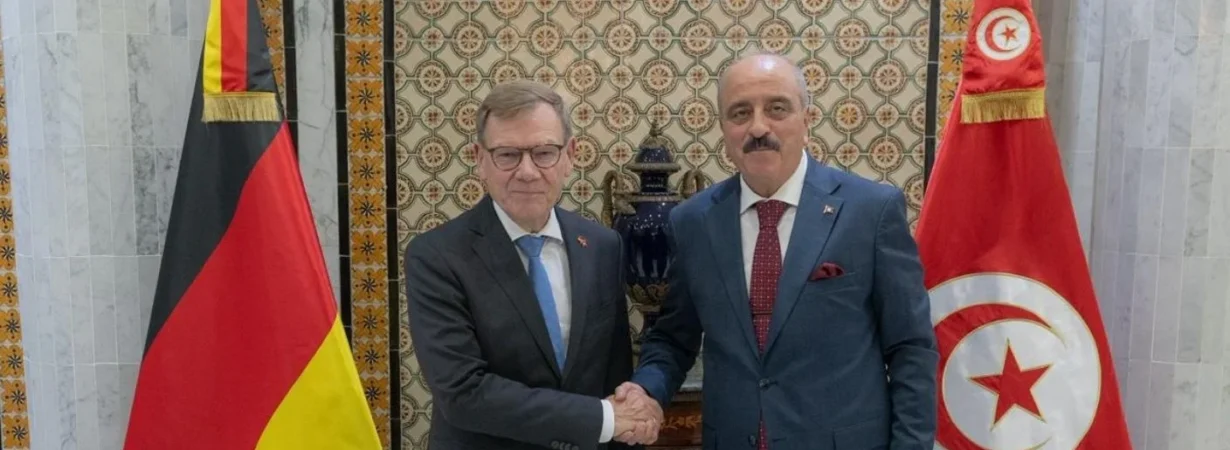
On August 31, 2026, an important diplomatic and economic breakthrough was achieved at the signing of new Tunisia and Germany accords in Tunis. During a high-level meeting, Tunisia Germany bilateral deals, Tunisian Minister of Foreign Affairs Mohamed Ali Nafti and his German counterpart, Johann Wadephul, signed five crucial financing contracts worth nearly €100 million. The high-level exchange between Tunisia and Germany is an important step towards reviving economic stability and sustainable development in North Africa. For those interested in international trade or the regional development, this is a breakdown of the sectors that stand to gain from this huge German investment in Tunisia.
Breaking Down the €100 Million Financial Package
The new financial package is more than an aid fund, it is an investment that is highly targeted to stimulate certain sectors of the Tunisian economy. The ministries explained how the €100 million (around $116 million USD) will be used in various projects after strategic meetings were held, including with Tunisian President Kais Saied.
Key Sectors Targeted for Growth
The five financing accords will mainly be directed towards the following key sectors, according to official reports from Tunis Afrique Presse (TAP):
- Small and Medium-Sized Enterprises (SMEs): Infusing much needed liquidity and structural support for local businesses to catalyze private sector growth and entrepreneurship at the local level.
- Energy and Environmental Transition: Providing funding for green initiatives, sustainable renewable energy projects and environmental protection programs.
- Digital Transition: Modernizing Tunisia’s digital infrastructure to boost tech-driven economic opportunities and modernize state services.
- Regional Development and Employment: Job creation and improving living standards in the regions outside of the capital in order to achieve equitable growth.
Moreover, the Ministry of Foreign Affairs, Migration and Tunisians Abroad announced that further projects, valued at €40 million, are currently being discussed, indicating that this new round of German investments in Tunisia is part of a far-reaching and long-term economic policy.
Beyond the Economy: Tourism, Migration, and EU Relations
The negotiations with the German Federal Foreign Office addressed various regional and international topics, though the accords with Tunisia and Germany also focused on financial and technical assistance.
Re-evaluating the Tunisia-EU Partnership
At the working session, President Saied and Minister Nafti emphasized the importance of rewriting existing frameworks and agreements, such as the comprehensive partnership agreement with the European Union. Tunisia is strongly calling for a more balanced relationship between equals, replacing historically unequal trade and diplomatic relations.
Migration is a key and complicated issue in politics, according to Middle East Online’s political analysis. In particular, European countries such as Germany are keen to cooperate with Tunisia in controlling illegal immigration in the Mediterranean. In return, Tunisia is seeking more monetary support and meeting the EU’s conditions to increase European tourism, including a larger influx of German tourists to its historic sites and coastal resorts.
Both the recent €100 million Tunisia and Germany deals are huge strides in the economic recovery of that North African nation. The substantial investment in Tunisia by the German government, which is significant and oriented towards the most promising areas of development, directly tackles the most urgent needs of the country with regard to employment and sustainability – in particular the fields of digital infrastructure, green energy and SME development. While the two countries are working on enhancing bilateral cooperation among the countries of Tunisia and Germany, this comprehensive financial package provides a positive and balanced precedent for future cooperation between the Euro-Mediterranean countries.
FAQs – Tunisia Germany bilateral deals
Q1: What are the new Tunisia and Germany agreements?
The two countries signed nearly €100 million worth of five specific financing agreements and contracts on 31st August 2026 to encourage SMEs, renewable energy, digital transition and regional employment in Tunisia.
Q2: Who officially signed the €100 million agreements?
The agreements were signed by the Tunisian Minister of Foreign Affairs Mohamed Ali Nafti and the visiting German Foreign Minister Johann Wadephul in Tunis.
Q3: Will there be more German investment in Tunisia soon?
A: Yes. The Tunisian foreign ministry said that other €40m worth of development projects are being taken into account to further bolster bilateral cooperation between the two countries.
Discover More Insights
Explore Cairo inflation middle class impact?
Discover how rising prices are affecting savings and daily life.
Check Algeria power plant deadline extension?
Explore updates on the 1.2GW energy project timeline.
Discover Turkey new electricity tariff changes?
Check how updated pricing will impact households and businesses.
Explore Qatar initiative boosting Syria power?
Discover efforts aimed at strengthening Syria’s electricity generation.
Check Beirut balcony lighting energy tips?
Explore efficient lighting ideas for Ramadan and beyond.