

Everything to Know About the New ARABSAT and LTT Satellite Agreement
-
Dhivyanshu
- . August 7, 2026
- . Update: August 7, 2026 7:51 pm
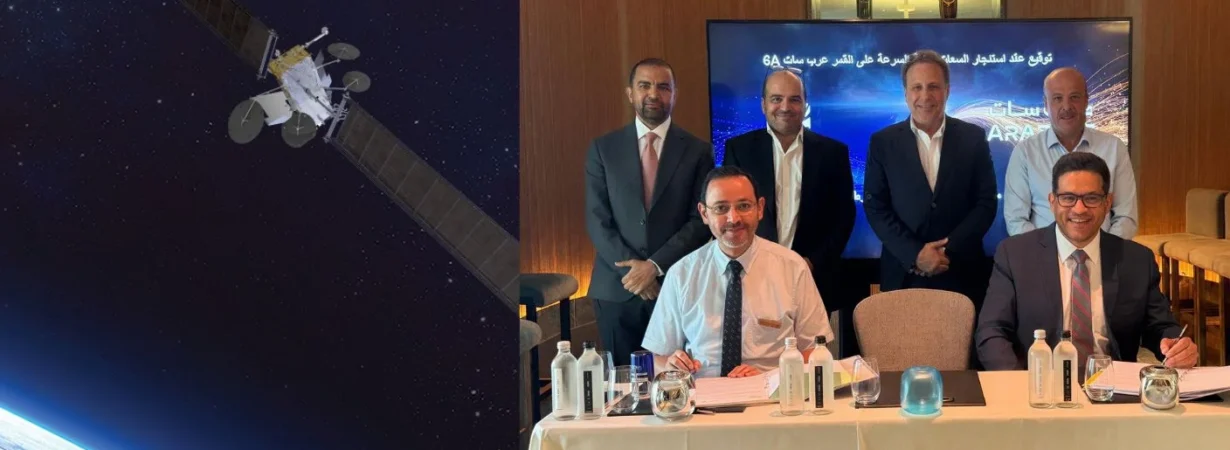
The landscape of North African telecommunications is changing kind a fast. On August 6, 2026, the Arab Satellite Communications Organization (ARABSAT) and Libya Telecom and Technology (LTT) signed a groundbreaking ARABSAT- and LTT satellite deal, meant at transforming Libya digital infrastructure in a really serious way. ARABSAT and LTT satellite agreement, By using advanced space technology, this partnership is expected to deliver safe, high speed, and expandable connectivity solutions across the nation. And if you’re thinking “ok, but how exactly will Arabsat-6A do it”, especially for businesses and government services in the region, here is basically all the key points you need to know about this big milestone.
Understanding the ARABSAT and LTT Satellite Agreement
This newly inked strategic partnership is being described as a major leap for the Libyan telecom sector. It blends the wide regional reach of ARABSAT — the leading satellite operator in the Arab world — with the localized, hands on know how of Libya Telecom and Technology, considered one of the country’s top telecommunications providers.
Per the official note, the center of the agreement revolves around High Throughput Satellite (HTS) technology. Instead of building a completely new satellite, ARABSAT will allocate dedicated, high capacity bandwidth on the existing Arabsat-6A satellite, placed carefully at 30.5 degrees East.
The Power of the Arabsat-6A Satellite
Launched in 2019, the Arabsat-6A satellite is kind of a powerhouse up in orbit . As a High Throughput Satellite , it’s built to deal with huge data loads, and to deliver broadband connectivity that local terrestrial networks often can’t quite match . By making use of that existing infrastructure, Libya Telecom and Technology can instantly improve what it offers , without waiting years, or paying for another expensive new launch.
Key Benefits for Libya Digital Infrastructure
So why is the ARABSAT and LTT satellite agreement such a big game-changer? For years, setting up a steady ground-based internet framework across Libya’s very broad geography has hit steep logistical barriers. This partnership handles those issues directly, and in a way, “goes to the sky” to solve it.
As reported by industry monitors like TechAfrica News, there are several immediate advantages for the country’s communications ecosystem :
- Enhanced Network Resilience: Satellite connections bring an extra kind of network protection, like a dependable fallback to terrestrial links, so even when something happens on the ground outages or damaged infrastructure- service still keeps moving, more or less.
- Wider Coverage Horizons: ARABSAT’s capacity lets LTT roll out steady broadband, for far-flung and underserved places, across the whole country, not only the main cities.
- Sector-Wide Upgrades: The added bandwidth will back up the essential operations across several critical areas, including government work, enterprise companies, and regional telecom operators, too.
Eng. Ammar Al-Bouzaidi, Chairman of the Board at LTT, said this step matters a lot for Libya’s digital economy ahead. Also, the agreement strengthens institutional relationships with the Libyan Post Telecommunications & Information Technology Company (LPTIC), which is the parent entity of the Libyan International Telecommunications Company (LITC), and LITC in particular is serving as one of ARABSAT’s main shareholders.
Driving the Future of North African Telecommunications
As the appetite for secure, high-capacity connectivity keeps rising everywhere, satellite communications in Libya are starting to feel not just useful but indispensable. This strategic alliance is more than some quick bandwidth upgrade; it’s basically a long-term resolve toward digital empowerment, even if that sounds a bit big.
By bringing the Arabsat-6A satellite into Libya’s national grid, the country is moving fast toward technological acceleration. The direction matches wider development targets that organizations like the World Bank often champion, because they tend to treat strong digital economies as a real requirement for lasting national growth. It also encourages innovation, and it puts Libya in a position as a highly connected center, able to support modern digital economies for the long run.
The recent ARABSAT and LTT satellite agreement is becoming a clear pivot for Libya’s digital infrastructure. By smartly leveraging the enormous capabilities of the existing Arabsat-6A satellite, Libya Telecom and Technology is set to sidestep the usual terrestrial limitations and close the digital gap. With backing from international benchmarks established by the International Telecommunication Union (ITU), this collaboration should empower neighborhoods, push sustainable economic momentum, and help lock in Libya’s role in the global digital future.
FAQs – ARABSAT and LTT satellite agreement
Q1: What is the ARABSAT and LTT satellite agreement?
A: It is a strategic partnership signed in August 2026 where ARABSAT provides high-throughput satellite capacity to Libya Telecom and Technology to help improve the internet and communications across Libya in a more steady way.
Q2: Which satellite is being used for this partnership?
A: The advanced telecommunications services will be delivered through the Arabsat-6A satellite, a powerful High Throughput Satellite (HTS) sitting at the 30.5° East orbital position, and that’s the one they rely on.
Q3: How will this affect Libya digital infrastructure?
A: It will drastically strengthen network resilience, expand broadband reach into remote areas, and provide dependable, secure connectivity for enterprise companies and government entities too.
Q4: Will this help the local economy?
A: Yes, because by keeping service continuity going and closing the digital gap, better satellite communications in Libya will directly contribute to the growth of the nation digital economy.
Discover More Insights
Explore Cairo inflation middle class impact?
Discover how rising prices are affecting savings and daily life.
Check Algeria power plant deadline extension?
Explore updates on the 1.2GW energy project timeline.
Discover Turkey new electricity tariff changes?
Check how updated pricing will impact households and businesses.
Explore Qatar initiative boosting Syria power?
Discover efforts aimed at strengthening Syria’s electricity generation.
Check Beirut balcony lighting energy tips?
Explore efficient lighting ideas for Ramadan and beyond.