

Oil Spill Reaches Oman’s Shores, Polluting Up to 40km of Coastline
-
The Arab Post
- . August 13, 2026
- . Update: August 13, 2026 5:34 pm
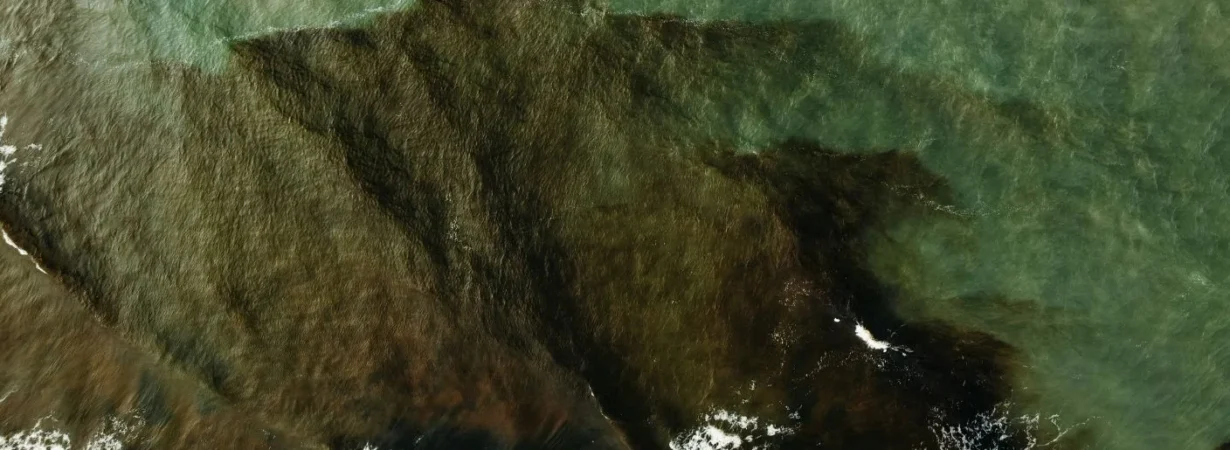
Oil from a grounded tanker off Oman’s southern coast has now reached the country’s mainland, contaminating beaches along a stretch of up to 40 kilometres and putting one of the region’s most sensitive marine environments at risk. Oman oil spill, Oman’s Environment Authority confirmed on Wednesday that crude from the tanker Caroline Bezengi had washed up at Ras Madrakah, roughly 200 kilometres north of where the ship first ran into trouble.
How the Spill Started
The Caroline Bezengi has been disabled near Oman’s Al Hallaniyat Islands since June 8, when its crew reported a suspected explosion. No one has claimed responsibility, and the cause still hasn’t been made public. The 247-metre tanker was carrying close to a million barrels of Russian crude when it went down, and it’s been slowly leaking oil into the sea ever since. What makes the situation more complicated is the ship’s background. The vessel is widely believed to be part of Russia’s so-called shadow fleet, a network of ageing tankers used to move sanctioned Russian oil around Western restrictions put in place after the 2022 invasion of Ukraine. It’s currently sanctioned by the EU, UK, Canada, Switzerland and Ukraine, and was sailing under a Cameroonian flag when the incident occurred.
A Spill That Kept Growing
For weeks, the slick sat mostly offshore, but that changed fast. According to satellite analysis, the affected area went from around 45 square kilometres at the end of July to 150 square kilometres by early August, then quadrupled to roughly 600 square kilometres within just a couple of days. Some specialists reviewing satellite imagery now estimate the slick covers more than 2,000 square kilometres, well beyond the nearly 400 square kilometres Omani officials had cited earlier in the week. Strong monsoon winds and currents are being blamed for pushing the spill toward shore faster than expected.
Which Areas Are at Risk
Oman’s Environment Authority says the pollution now stretches along roughly 40 kilometres of coastline near Ras Madrakah, and officials warned that oil could reach the southern beaches of Masirah Island, the country’s largest island, within hours. Masirah is a well-known destination for wildlife tourism, particularly turtle nesting and hatching, and the surrounding waters are also home to Arabian Sea humpback whales. The area near the original grounding site is part of a protected marine reserve, adding another layer of concern for coral reefs and other marine habitats already in the spill’s path.
The Response So Far
Authorities say specialist teams are working to contain the spread, focusing on areas considered especially environmentally sensitive, and have used booms to try to limit how far the oil travels. Even so, experts monitoring the situation have raised concerns about the pace of the broader response. One satellite imagery analyst noted there’s been no visible sign of efforts to stabilise the tanker itself or remove the oil still on board, despite the incident dragging on for more than two months. Experts say containing a spill of this scale typically requires aerial dispersant spraying along with booms and skimming equipment, and that keeping the oil offshore is far less damaging than letting it reach shallow coastal waters.
What Happens Next – Oman oil spill
Oman’s Environment Authority has asked the public not to approach any oil or debris that washes ashore and to report sightings to the relevant authorities instead. With the slick continuing to expand and monsoon conditions still in play, officials are bracing for the contamination to spread further along the coastline in the coming days, even as questions remain about what caused the initial explosion and how a tanker linked to sanctioned Russian oil trade ended up disabled near one of Oman’s most ecologically sensitive marine areas.
Discover More Insights
Explore Cairo inflation middle class impact?
Discover how rising prices are affecting savings and daily life.
Check Algeria power plant deadline extension?
Explore updates on the 1.2GW energy project timeline.
Discover Turkey new electricity tariff changes?
Check how updated pricing will impact households and businesses.
Explore Qatar initiative boosting Syria power?
Discover efforts aimed at strengthening Syria’s electricity generation.
Check Beirut balcony lighting energy tips?
Explore efficient lighting ideas for Ramadan and beyond.