

“Not Charity, But Justice”: Nepal Demands Flood Compensation From Major Emitters
-
The Arab Post
- . September 2, 2026
- . Update: September 2, 2026 4:43 pm
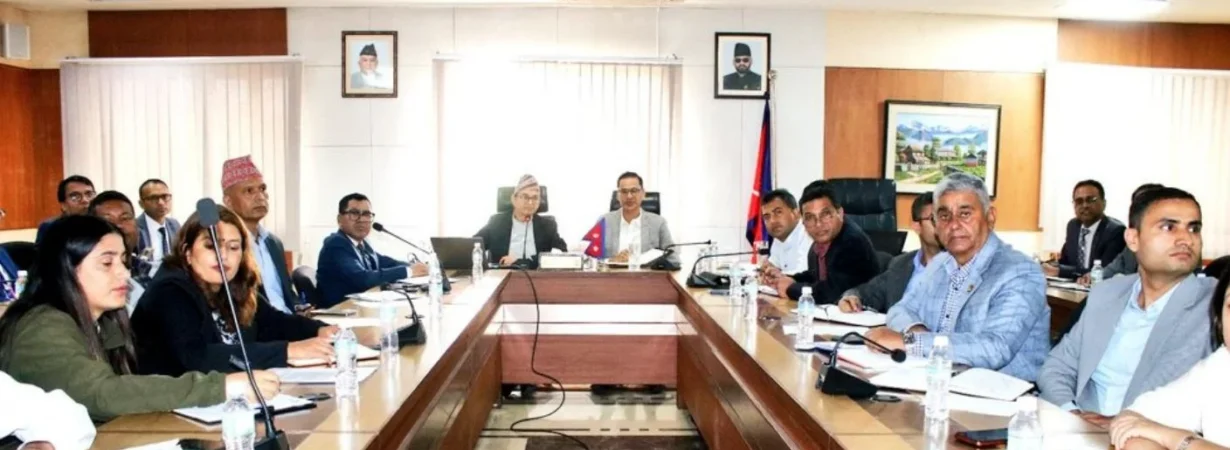
Nepal is seeking compensation from China, the United States, and India, Nepal climate compensation, the world’s three largest greenhouse gas emitters, for the damage caused by recent flash floods, including the Rasuwa disaster along the Trishuli River.
Foreign Minister Shishir Khanal laid out the shift in blunt terms during an interview with Kantipur TV, saying the country is moving its diplomatic framework from aid to justice and compensation, describing it as a matter of legal and moral liability rather than charity.
Khanal argued that Nepal’s own greenhouse gas emissions are practically negligible, yet the country continues to absorb the worst consequences of a crisis it played almost no role in creating.
The Human Cost Behind the Diplomatic Push
The demand follows a string of destructive floods that have battered Nepal in recent years, including the Rasuwagadhi flash flood that swept away the Sino-Nepal Friendship Bridge, killed at least eight people, and disrupted cross-border trade with China. Khanal pointed directly to rapid glacier melt and what he called catastrophic mountain tsunamis as direct consequences of global climate change, telling viewers that Nepal is paying the ultimate price for a crisis it did not create.
Naming the Emitters
Khanal specifically identified China as the world’s top greenhouse gas emitter, the United States as second, and India as third, arguing that industrial powers of this scale carry historical responsibility to compensate vulnerable nations like Nepal. India, for its part, has consistently pushed back against blanket responsibility framing, emphasising its relatively low per-capita emissions and arguing that climate obligations should account for differences in countries’ historical emissions, development needs, and capacity.
New Delhi has instead pointed to Western nations that industrialised earlier as having consumed the majority of the global carbon budget, while still voicing support for addressing loss and damage in vulnerable developing countries.
Taking the Case to the United Nations
Nepal is now weighing whether to escalate this message onto the world stage. Government officials have begun discussing whether Prime Minister Sushila Karki (referred to in reports simply by title) should attend the 81st United Nations General Assembly to press the case directly, alongside Foreign Minister Khanal, who has already been confirmed to attend. The goal would be to spotlight Nepal’s mounting climate losses, including the Rasuwa and broader Bhotekoshi flooding, in front of a global audience.
Part of a Longer-Running Argument
This is not the first time Nepal has raised the issue on an international stage. At COP29 in Baku, Nepal’s leadership described climate justice and reparations for loss and damage as paramount concerns, noting that recent glacial lake outbursts and floods had caused damages worth tens of billions of rupees, far beyond what the country’s limited resources and capacity could absorb alone.
What has changed now is the explicit language of compensation and liability, replacing the softer appeals for aid and finance that have typically characterised Nepal’s past requests.
Why the Distinction Matters
The shift from asking for aid to demanding compensation is not just rhetorical. Aid implies discretion, something wealthier nations can choose to give or withhold. Compensation implies an obligation tied to responsibility for causing the harm in the first place.
For a country like Nepal, sitting at the base of some of the world’s fastest-melting glaciers while contributing almost nothing to the emissions driving that melt, the reframing is an attempt to shift the burden of proof onto the nations whose industrial growth has reshaped the planet’s climate.
FAQ – Nepal climate compensation
Which countries is Nepal seeking compensation from?
Nepal named China, the United States, and India, identifying them as the world’s top three greenhouse gas emitters.
What triggered Nepal’s compensation demand?
Recent deadly flash floods, including the Rasuwa disaster that destroyed the Sino-Nepal Friendship Bridge, prompted the government to reframe its climate diplomacy around justice rather than aid.
Is Nepal taking this issue to the United Nations?
Nepal’s Foreign Minister is set to attend the 81st UN General Assembly, and officials are discussing whether the Prime Minister should also attend to press the case internationally.
Discover More Insights
Explore Cairo inflation middle class impact?
Discover how rising prices are affecting savings and daily life.
Check Algeria power plant deadline extension?
Explore updates on the 1.2GW energy project timeline.
Discover Turkey new electricity tariff changes?
Check how updated pricing will impact households and businesses.
Explore Qatar initiative boosting Syria power?
Discover efforts aimed at strengthening Syria’s electricity generation.
Check Beirut balcony lighting energy tips?
Explore efficient lighting ideas for Ramadan and beyond.