
Why the Houthis May Be Testing Saudi Arabia’s Strategic Limits
-
Dhivyanshu
- . July 22, 2026
- . Update: July 22, 2026 10:51 pm
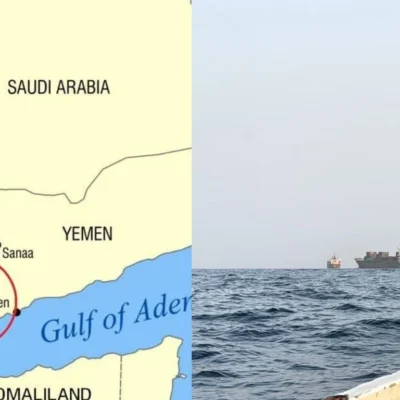
The recent Houthi declaration warning it might block Saudi-bound vessels in the Red Sea is more than just revolutionary talk, it seems like a very calculated escalation. Houthi attacks on Saudi Arabia, For almost a decade, Riyadh has been leaning hard on regional stability rather than direct retaliation, showing real restraint even while it faced endless provocations. Still, as Iran’s proxy conflict keeps heating up, this risky bet may end up forcing the Kingdom toward a more decisive response. So the question is basically this: can Saudi Arabia’s strategic patience last, or are the Houthis stepping over a kind of red line that will reshape, the Middle East geopolitics in a meaningful way?
The Strategy Behind Houthi Attacks on Saudi Arabia
Tehran’s bigger aim does not look like outright military triumph. Instead, it’s more about forcing severe economic strain. By leaning on its most effective regional proxy, Iran wants to tighten pressure on Saudi Arabia from both of its maritime routes, the eastern and the western gateways. At the same time, it also tries to broadcast instability outward across a wider area, like a ripple effect you can’t easily stop.
- Economic Intimidation: The central target is investor confidence, to sap it slowly and steadily, while also threatening the Kingdom’s long-running economic shift, the one that’s officially called Saudi Vision 2030.
- Global Energy Threats: Saudi Arabia is one of the world’s top crude oil exporters, and it sits right at the base of the global energy market. If Saudi exports get meaningfully disrupted for any length of time, the impact won’t stay local—it would create shockwaves worldwide. The International Energy Agency, (IEA) has repeatedly pointed out that stability in the Middle East is the hinge for international shipping, insurance pricing, and inflation trends.
- Logistical Expansion: Iran’s newer moves to revive a Tehran-Sana’a air link suggest an effort to route drone technicians, missile specialists, and intelligence staff straight into Houthi-held territory, according to research from the Counter Extremism Project.
The Royal Saudi Air Force, or RSAF, strikes on Sana’a International Airport were sort of a direct reply to that logistical threat. It felt like a calculated move, and yeah, pretty necessary too, to keep Tehran from building a permanent command structure that could keep on enabling long-range Houthi attacks on Saudi Arabia.
A Radically Transformed Saudi Military Capability
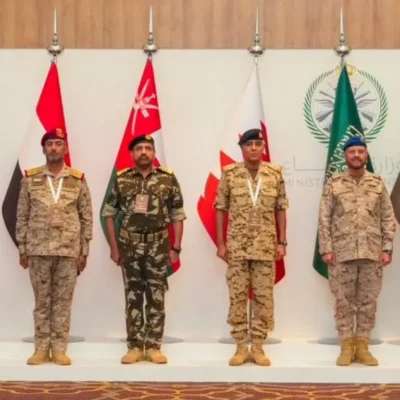
If Tehran thinks it is up against the same Saudi military that first stepped into Yemen about a decade ago, then it is kind of leaning on assumptions that are both very old and, frankly, hazardous. The modern Saudi-led Joint Forces Command (JFC) didn’t just “stick around”; it went through a big, structural makeover—one that took hard-learned lessons and turned them into a serious, modernized fighting formation.
Centralized Escalation Control
Right now, today’s JFC doesn’t really run as separate combatant stacks. Instead, it works through an advanced, blended command and control (C2) design. That modernization, overall, makes it possible to do things like:
- Persistent Intelligence Gathering: Kind of real-time data fusion across air, land, and maritime lanes.
- Synchronized Precision Strikes: Shrinking the gap between collecting intelligence and then actually executing operations.
- Unified Coalition Integration: Working smoothly alongside allied Yemeni, Pakistani, and GCC formations without the usual friction.
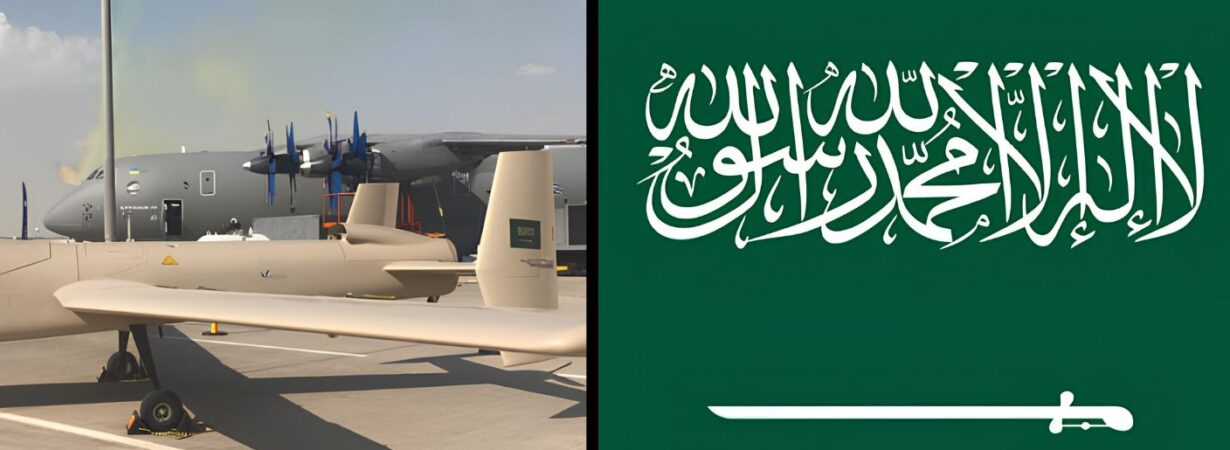
Defense specialists at the International Institute for Strategic Studies (IISS) have already described how this defense sector overhaul lines up tightly with wider national modernization ambitions. The JFC’s newfound maturity was hard to miss when the Royal Saudi Air Force executed synchronized precision strikes across multiple theaters, holding precise escalation control in place while resisting coordinated Iranian drone attacks.
The Breaking Point of Saudi Arabia Strategic Patience
Saudi Arabia has, time and again, shown that its main focus is long-term national development, leaning on diplomacy and deterrence more than on any larger regional war. But the truth of Middle East geopolitics is that no sovereign state can forever put up with a proxy militia that keeps choking off its maritime lifelines, and also puts critical infrastructure at risk. The United Nations Security Council has said, more than once, that safe maritime navigation is non-negotiable, because the global stakes are simply too high.
Now, sure, the Houthis can cause real damage in asymmetrical ways. They can use drones and missiles, and they can lean hard on psychological operations too, to keep Red Sea shipping in a constant state of disruption. Still, they don’t really have the staying power, the operational endurance to survive a comprehensive, sustained campaign against someone with clear air, maritime, and intelligence superiority.
Each new provocation pushes Riyadh closer to some tipping point, and that is where things stop being theoretical. If Saudi Arabia strategic patience is eventually crossed, any Saudi response probably won’t just be about isolated missile launch sites. It would be designed to dismantle, in a systematic way, the whole command web, communications channels, and logistics networks that keep Houthi military efforts moving.
In the end, the Houthis aren’t merely testing Saudi military capability. Those answers have already been worked out over years of battlefield adaptation, so the bigger question is really the limits of Saudi Arabia strategic patience. And if Tehran keeps treating proxy warfare as a tool of coercion, Riyadh might soon decide that continuing restraint is more expensive than choosing decisive action. When that moment comes, the conflict that follows won’t look much like the Yemen war of the past, and it will reshape Middle East geopolitics in a lasting, permanent manner.
FAQs – Houthi attacks on Saudi Arabia
Q1: Why is Saudi Arabia showing strategic patience with the Houthis?
Saudi Arabia is sort of overwhelmingly focused on its Vision 2030 economic transformation. In the meantime, the Kingdom is also trying to keep regional stability, so it does not get pulled into a drawn-out wider regional clash that is being deliberately planned by Iran.
Q2: How do Houthi attacks impact global markets?
The ongoing Red Sea shipping disruption, driven by the Houthis, messes with critical marine bottlenecks like the Bab al-Mandeb strait. And because Saudi Arabia is a key supplier of global energy, these seaborne threats can cause global inflation to jump, while also throwing international supply chains off rhythm.
Q3: Is the Saudi military equipped to handle escalating Houthi threats?
Yes. Over the last ten years, Saudi forces have evolved into a very integrated, technologically capable kind of power. The Royal Saudi Air Force and the Joint Forces Command now lean on an advanced C6ISR architecture (Command, Control, Communications, Computers, Cyber, Defense, Intelligence, Surveillance, and Reconnaissance ) to enable precision targeting as well as centralized escalation control.
Discover more Insights
Explore Iran War Lessons Globally?
Explore how the 2026 Iran war reshapes global power and strategy.
Discover Iran Delay Strategy Tactics?
Discover how Iran uses delay, repression, and proxy influence.
Check Trump Iran Strategy Importance?
Check why Trump’s Iran strategy depends on Gulf allies.
Explore Iran Military Warning Signals?
Explore rising warnings from Iran alarming global powers.
Discover Sudan Iran Axis Threat?
Discover how the Sudan-Iran axis raises serious regional concerns.